Back to home

Stories of the Sea

A story you can step inside. Explore Emirati everyday objects with Bu Ahmed and Shamsa.

Explore the experience

A little context.

A fishing boat, a woven rug, a basket, a loom. Each object holds a small piece of everyday Emirati life. Stories of the Sea turns those objects into invitations to look closer.

The prototype opens on Bu Ahmed and Shamsa in a room you can turn by dragging. A voice asks you to find one thing at a time, in English or Arabic, and each find opens a short lesson.
Let curiosity move the story.

There are no menus to learn. A question sets a small task, and the room itself is where you answer it.

  1. It starts with a question.

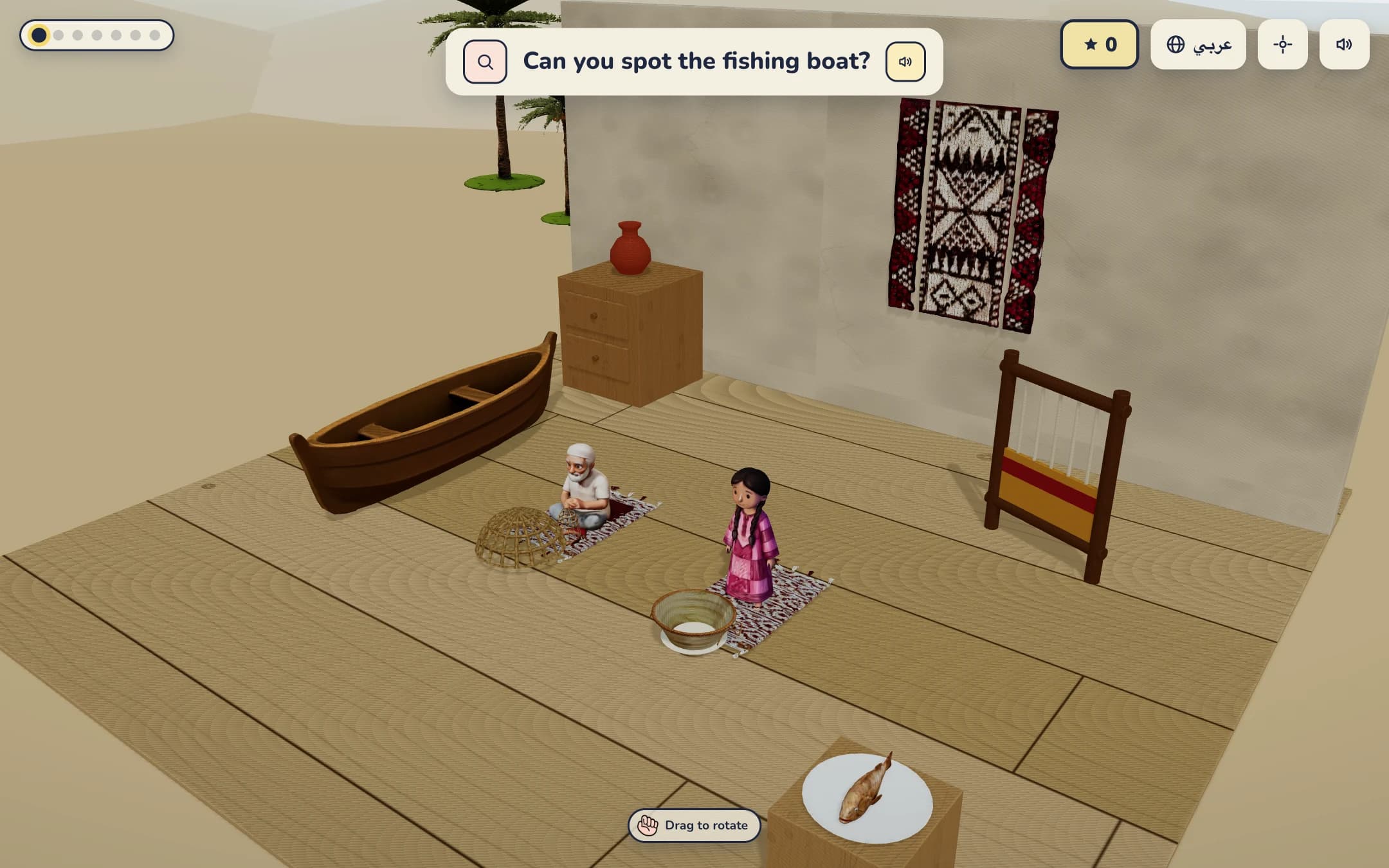
    “Can you spot the fishing boat?” The prompt sits at the top with a button to hear it again. Progress and stars stay quietly in the corners.

  2. The room is the way around.

    Drag and the whole room turns. Looking is the only skill it asks for.

  3. Finding is the reward.

    Tap the right object and it lights up. Stars are added, confetti falls and Shamsa walks over to it.

  4. Then a small lesson.

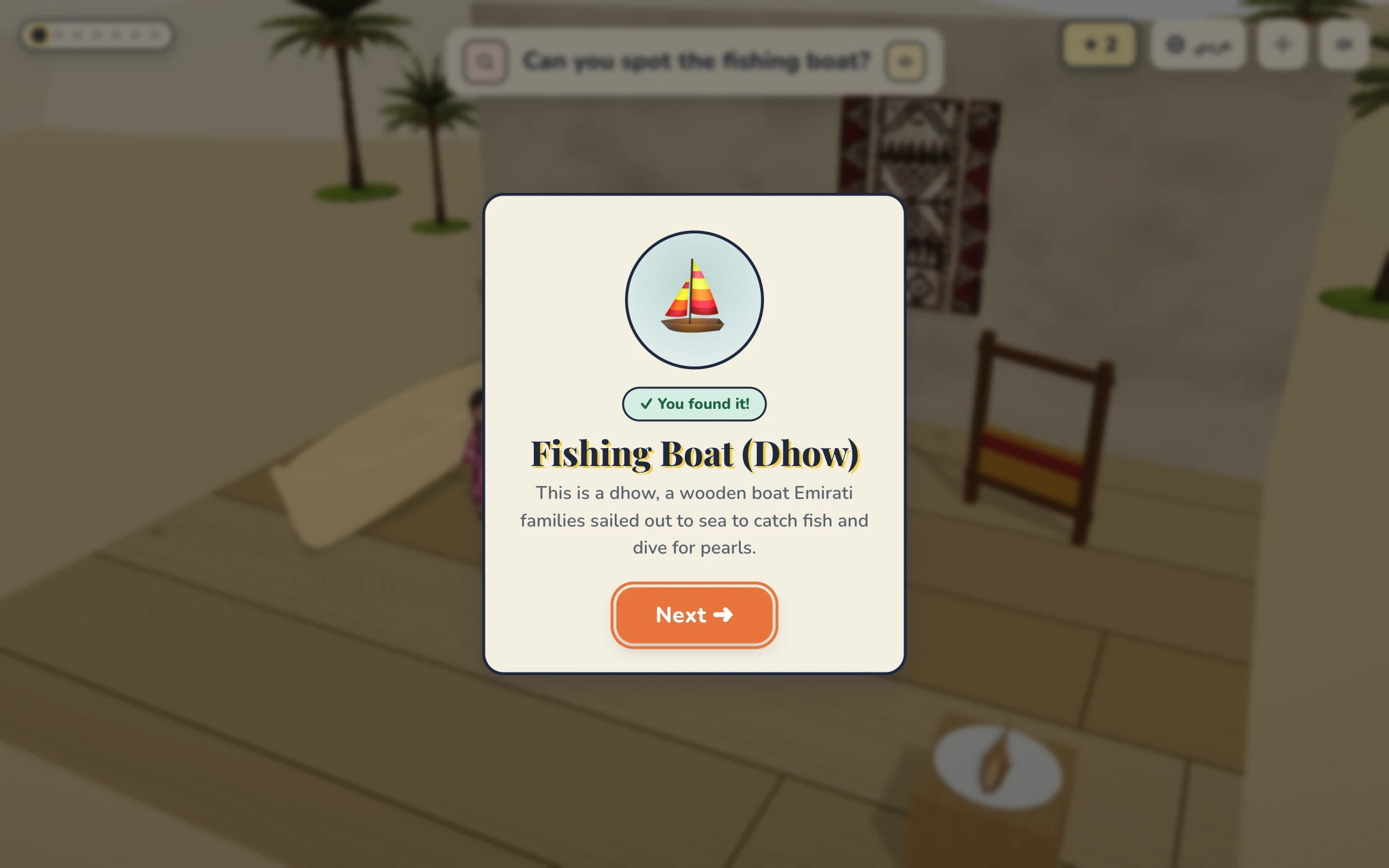
    A card names the object and tells its story in a couple of lines. Next brings the following question.

  5. And an ending worth reaching.

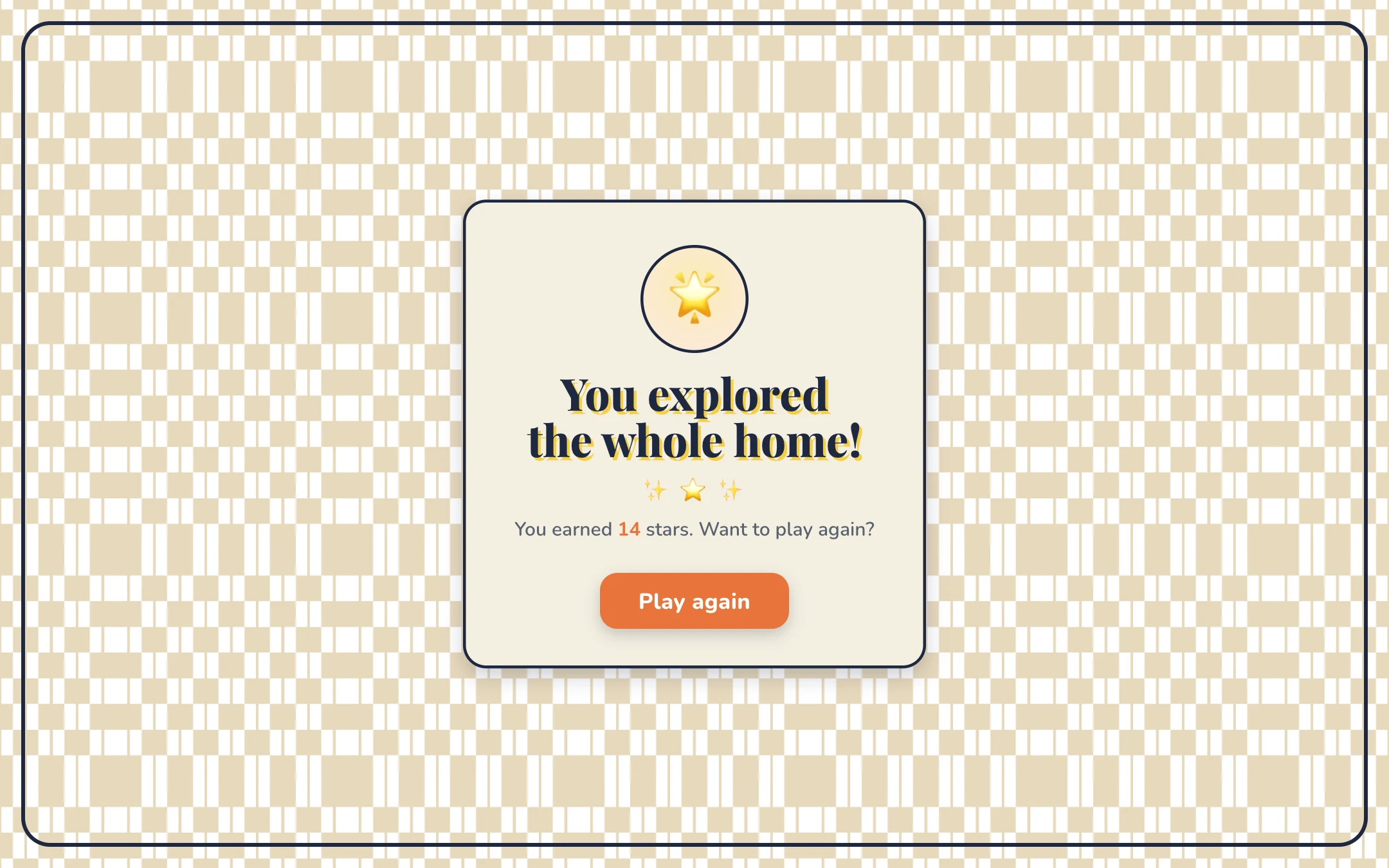
    After the seventh object the room gives way to a tally of stars and an invitation to play again.

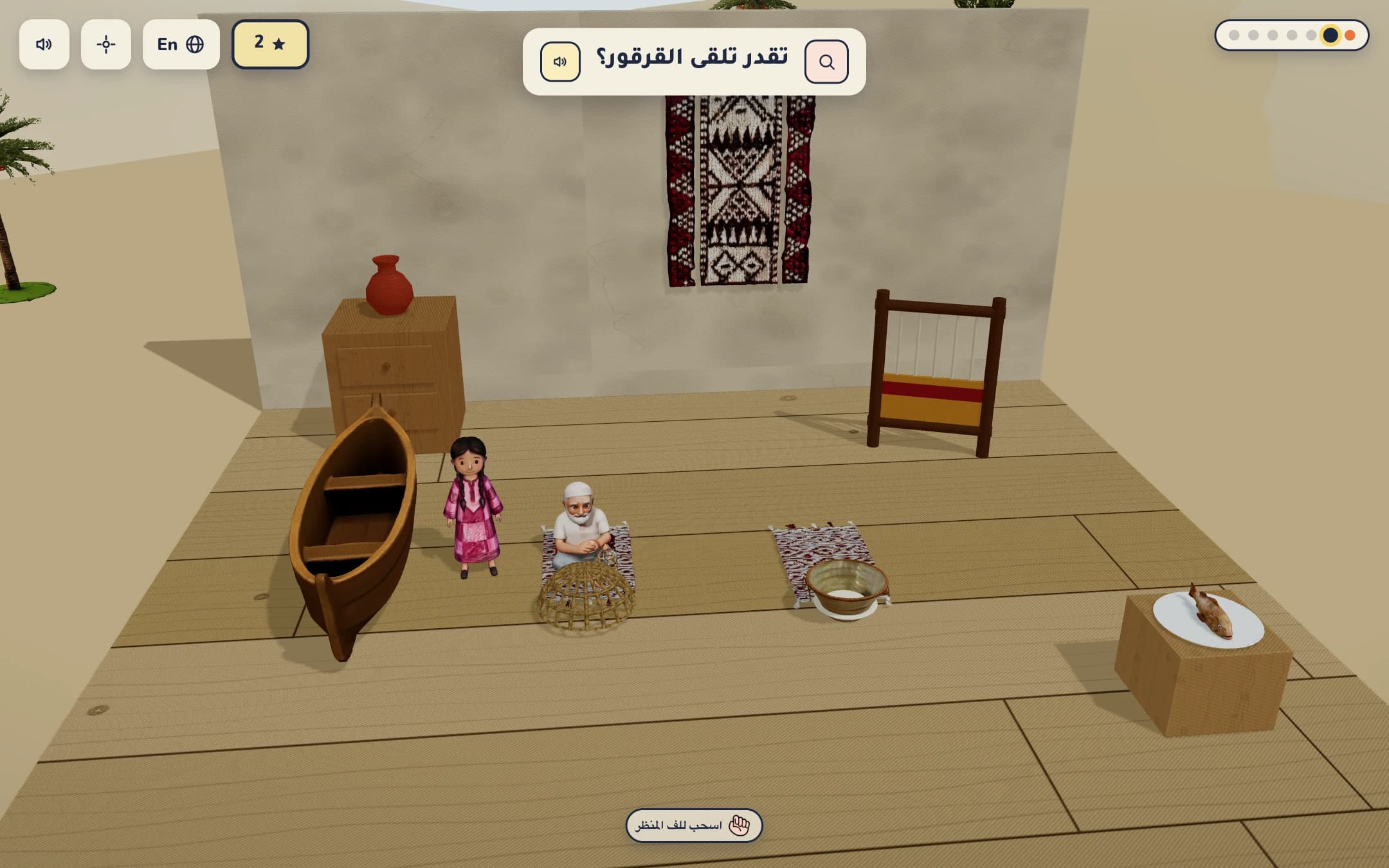
The 3D room with Bu Ahmed, Shamsa, a boat, a jar, a rug and a loom, under the question Can you spot the fishing boat?

Let each object say a little.

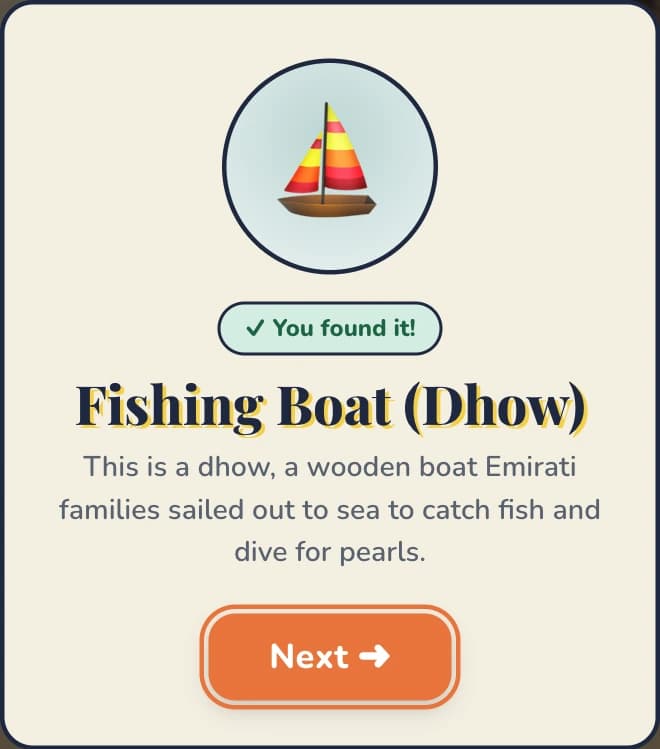
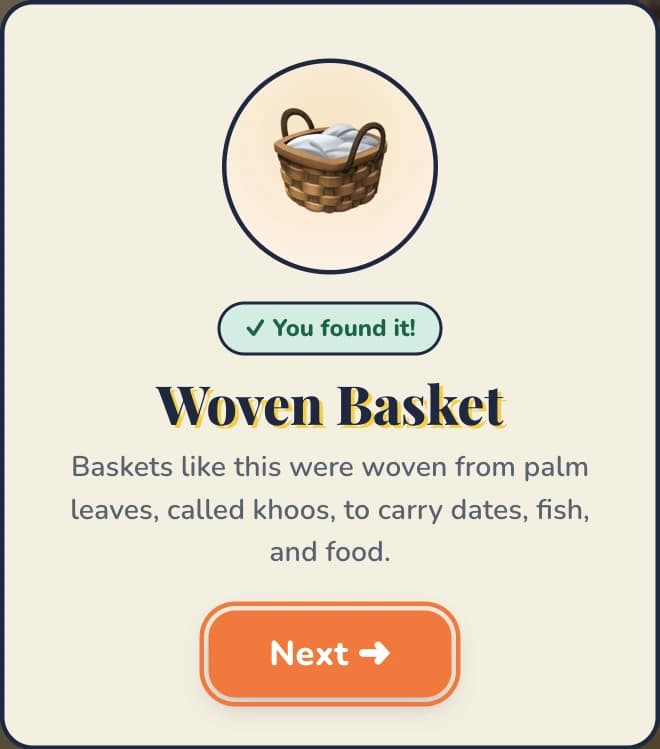
Each object answers with one idea a child can keep: what it is called, what it was for, who used it. The dhow went out for fish and pearls. Baskets were woven from palm leaves, called khoos.

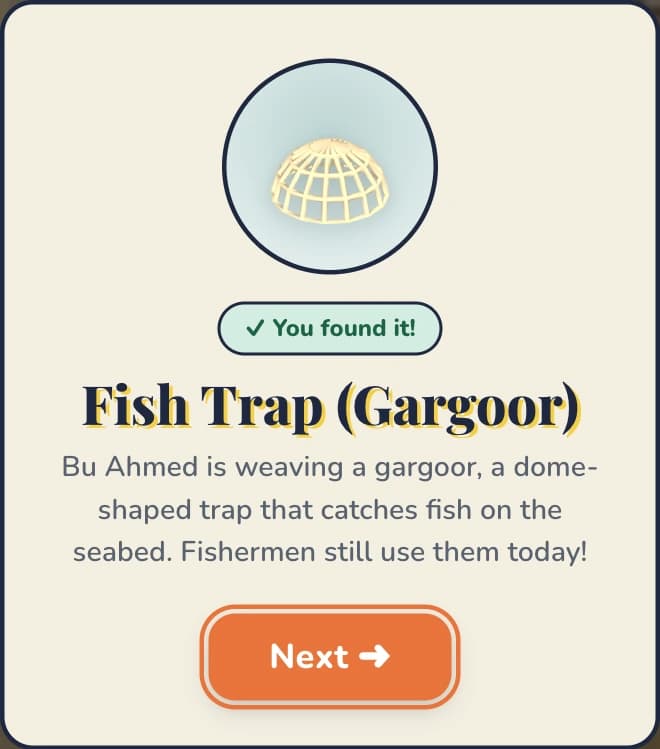
Bu Ahmed and Shamsa belong to the lessons too. He is weaving the fish trap; she is learning the loom. The characters give the objects someone to belong to.

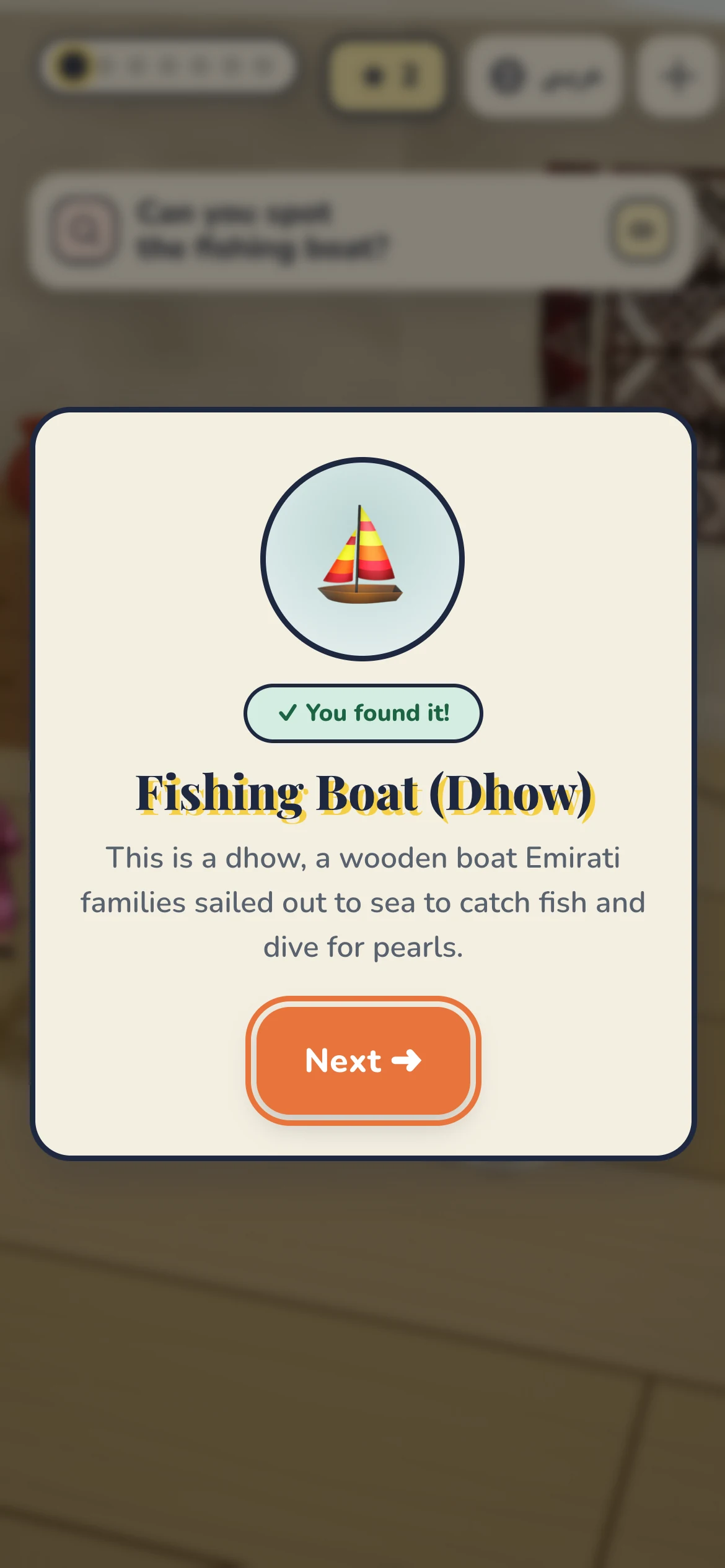
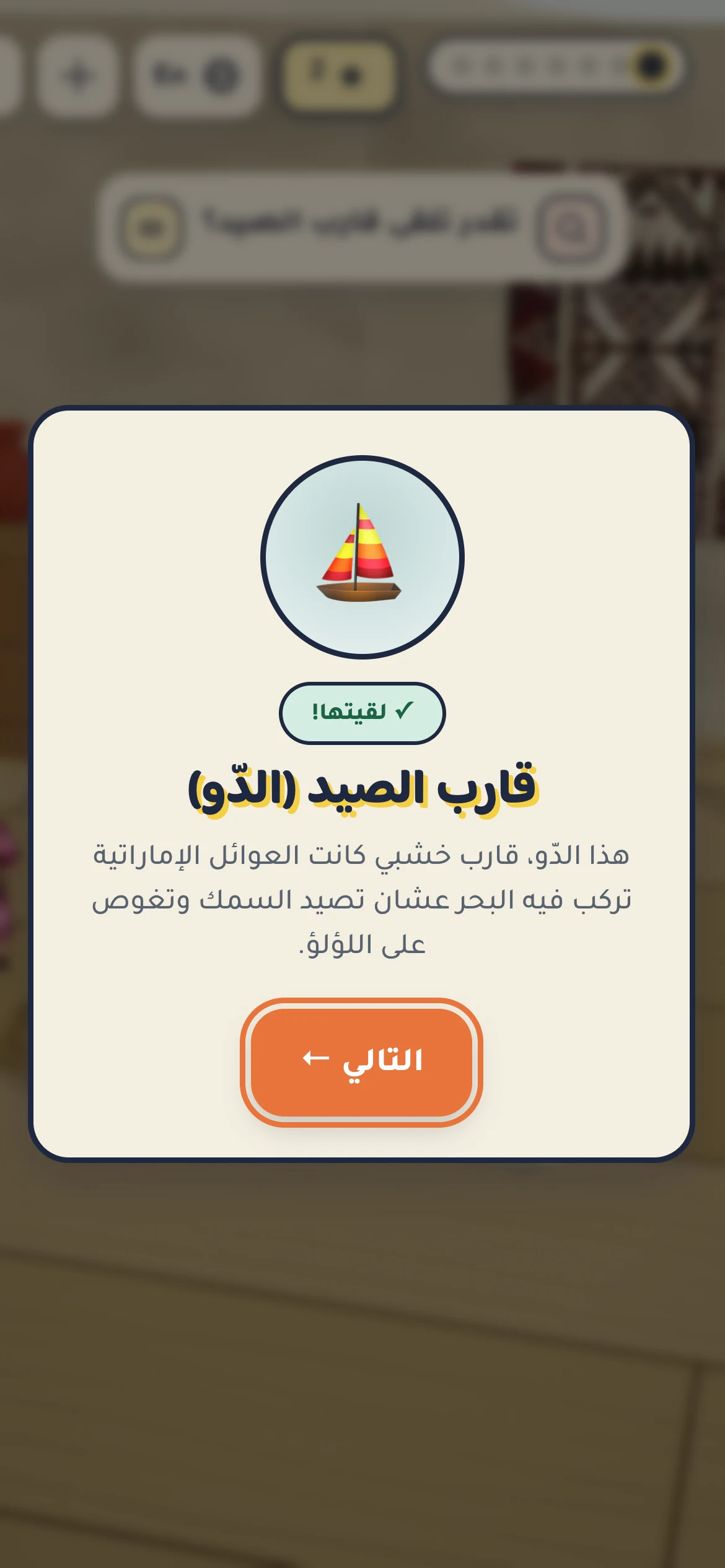
Lesson card: Fishing Boat (Dhow). This is a dhow, a wooden boat Emirati families sailed out to sea to catch fish and dive for pearls.
Lesson card: Fish Trap (Gargoor). Bu Ahmed is weaving a gargoor, a dome-shaped trap that catches fish on the seabed.
Lesson card: Woven Basket. Baskets like this were woven from palm leaves, called khoos, to carry dates, fish and food.
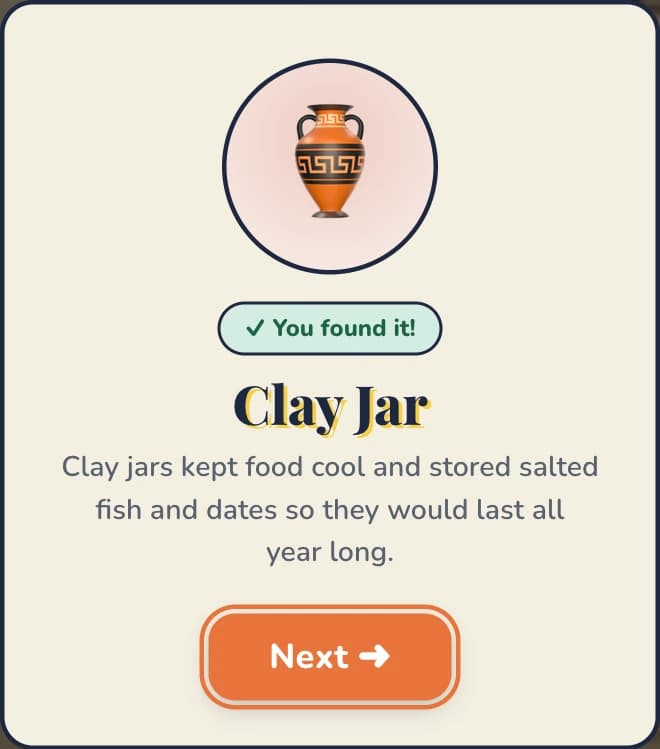
Lesson card: Clay Jar. Clay jars kept food cool and stored salted fish and dates so they would last all year long.
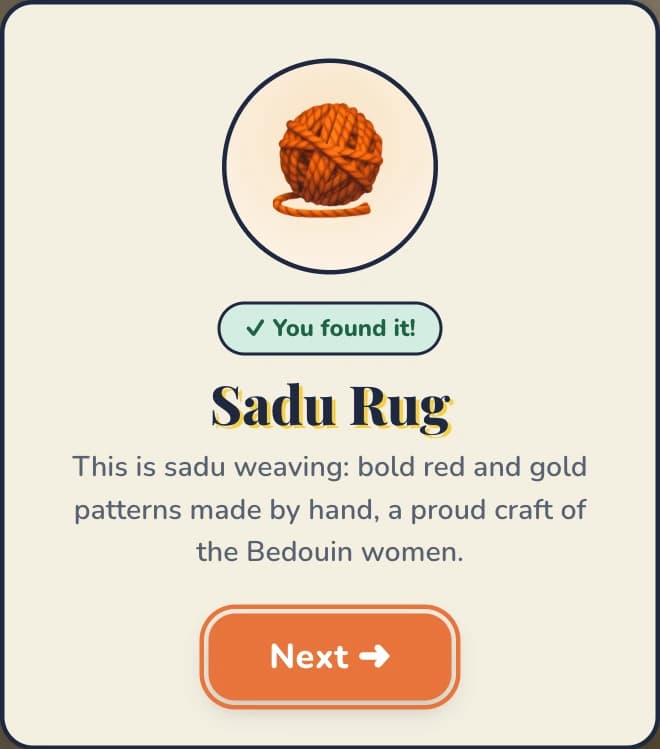
Lesson card: Sadu Rug. This is sadu weaving: bold red and gold patterns made by hand, a proud craft of the Bedouin women.
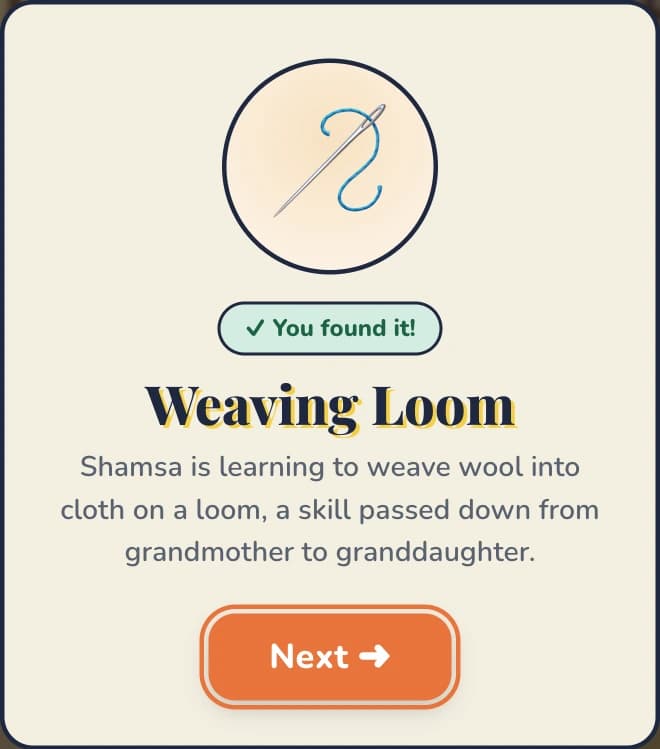
Lesson card: Weaving Loom. Shamsa is learning to weave wool into cloth on a loom, a skill passed down from grandmother to granddaughter.
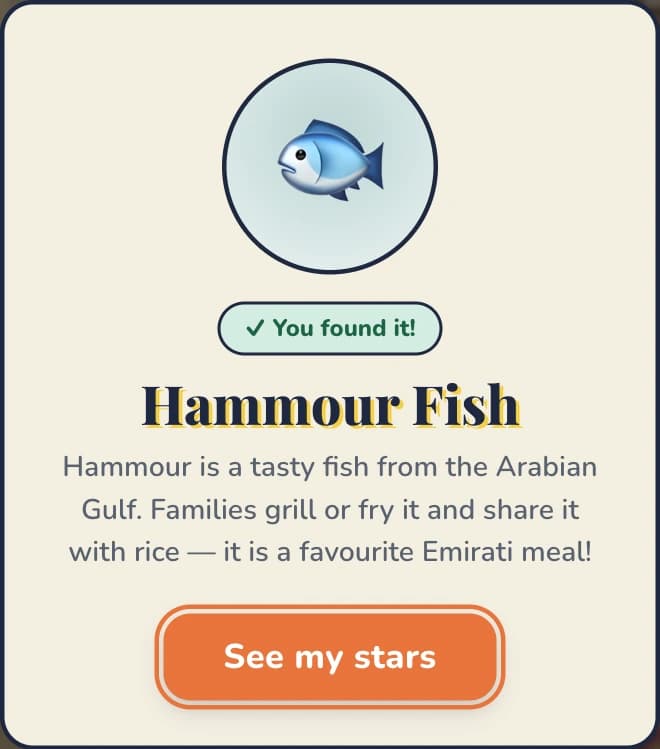
Lesson card: Hammour Fish. Hammour is a tasty fish from the Arabian Gulf that families grill or fry and share with rice.

Seven objects and three threads: the sea, weaving, and keeping food through the year.

Keep the invitation natural in both languages.

One tap changes the language. The question, the lesson and every control switch to Arabic, and the layout mirrors with them: stars, progress and buttons trade sides.

The Arabic is written in the everyday Emirati dialect, so the story sounds the way it would be told at home.

The 3D room with the question in Arabic. The language, re-centre and sound buttons and the star count have moved to the left, and the progress dots to the right
The room in Arabic: the question, the hint and every control switch sides.
The dhow lesson card on a phone in English
The lesson in English.
The same lesson card on a phone in Arabic, with the controls mirrored
The same lesson in Arabic, mirrored.
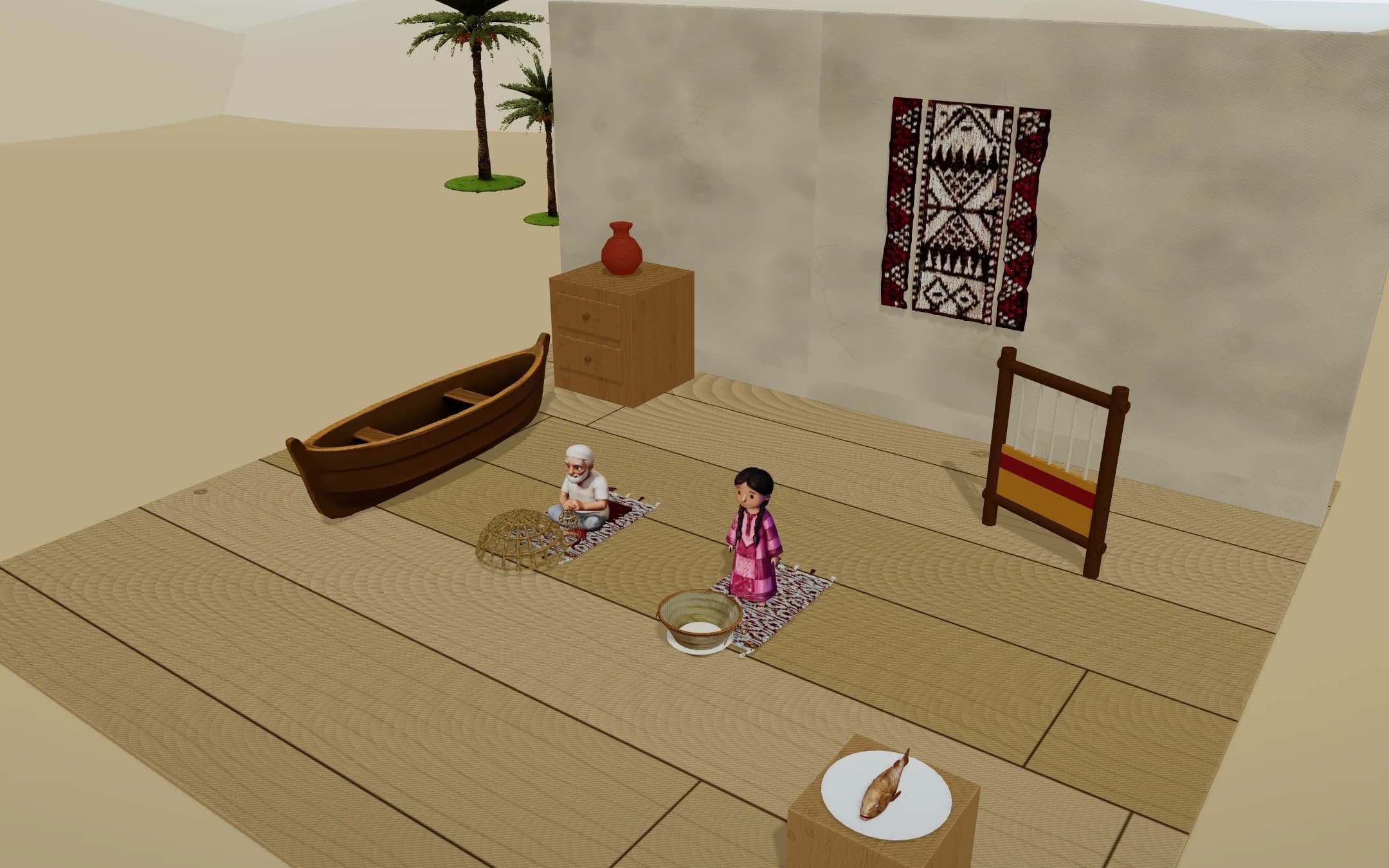
The 3D room without the interface: a boat, a chest with a clay jar, a sadu rug on the wall, a loom, Bu Ahmed with a fish trap, Shamsa beside a basket, and a plate of fish
The room, without the interface.

What I take
from it.

The direction brings storytelling and discovery into the same interaction. A small question can encourage someone to notice an object, and that object can open a conversation about how people lived.

The next stage would examine how comfortably people explore and understand the scene, and how each encounter can connect to a fuller story about the object and its place in everyday life.

Nice things I’ve
done recently.

Let’s
have it.

let’s play together