Back to home

Flavoriq

A flavour wheel you can reach into. An experiment in turning taste vocabulary into a playful, spatial experience.

Explore the experience
The flavour wheel on a phone, filling the width of the screen

A little context.

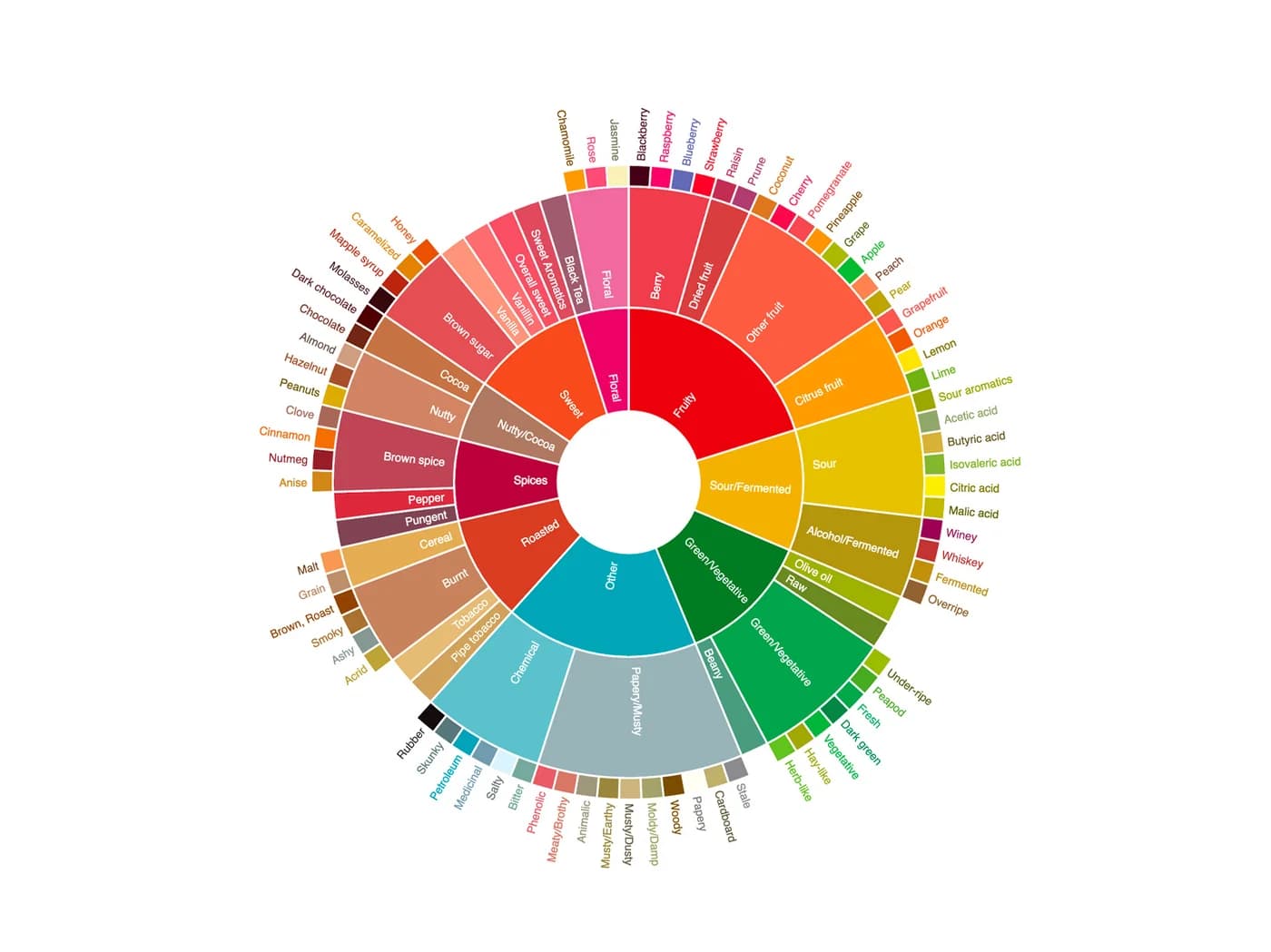
A flat coffee taster’s flavour wheel: families such as Fruity, Floral, Sweet and Roasted at the centre, subfamilies around them, and single flavours such as Raspberry, Jasmine and Hazelnut on the outer edge
The flat flavour wheel the project starts from.

We can recognise a taste before we have the words for it. A flavour wheel connects that sensation to a vocabulary, from broad families such as fruity or floral to specific notes.

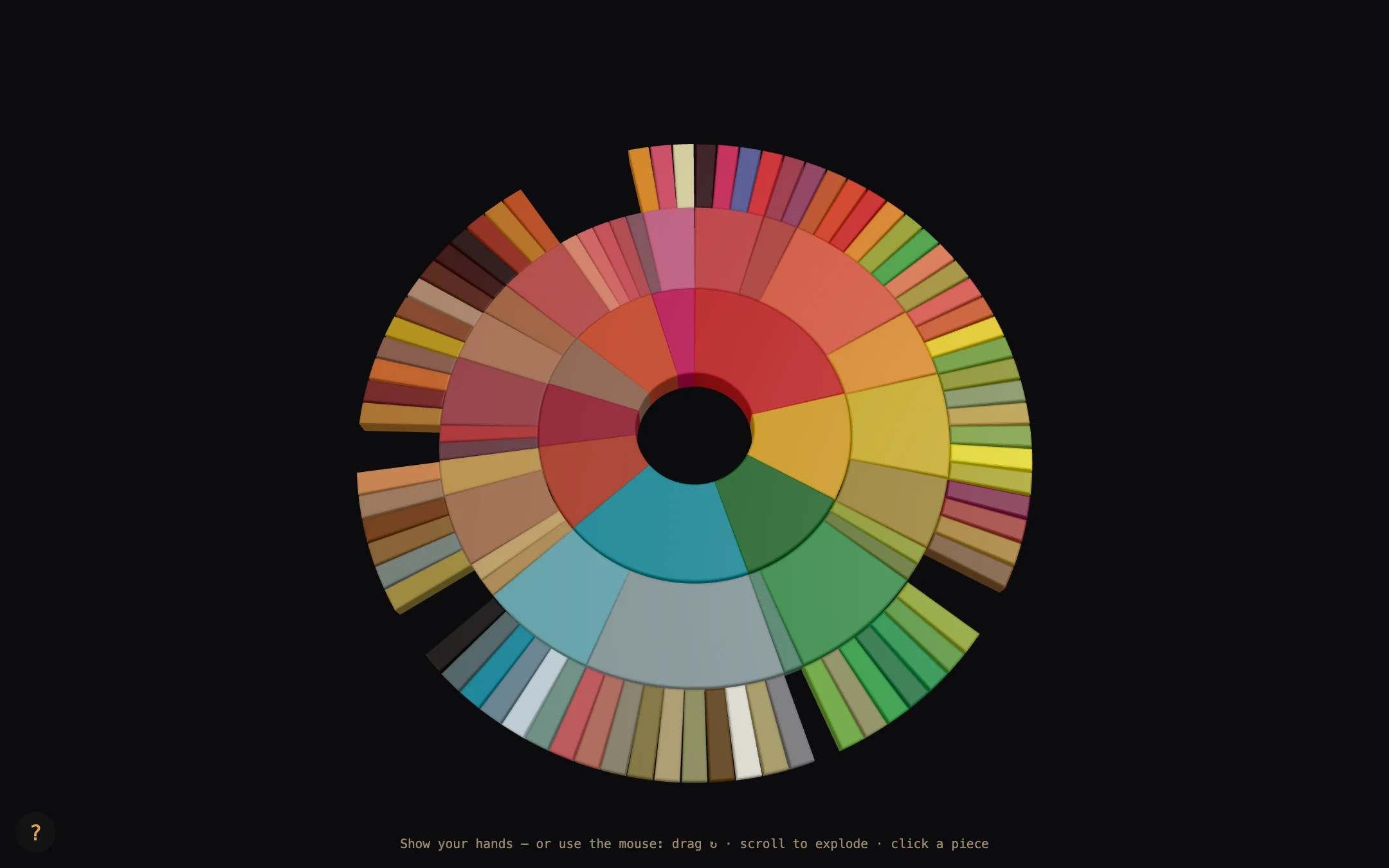
Flavoriq takes the coffee taster’s wheel and gives it depth. Coloured pieces form three rings, from families to subfamilies to single flavours, and the whole thing can be turned, opened and read piece by piece.
Start with the whole. Look closer at a piece.

The wheel is a map before it is an interface. Every interaction is a way of getting nearer to one part of it.

  1. One composition.

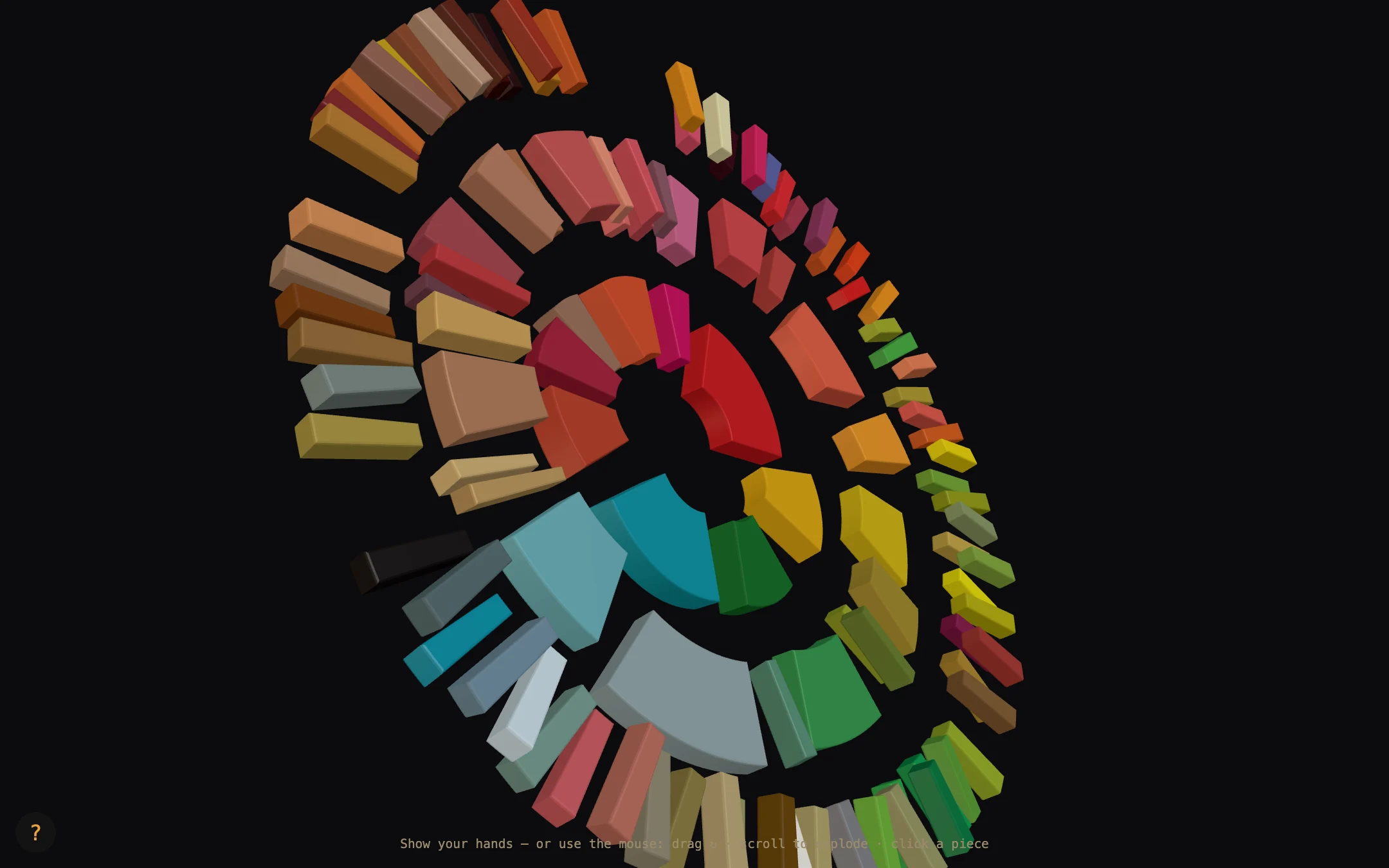
    The wheel opens flat and complete. Colour keeps related notes together; the rings show a family becoming more specific as it moves outward.

  2. Turn it in your hand.

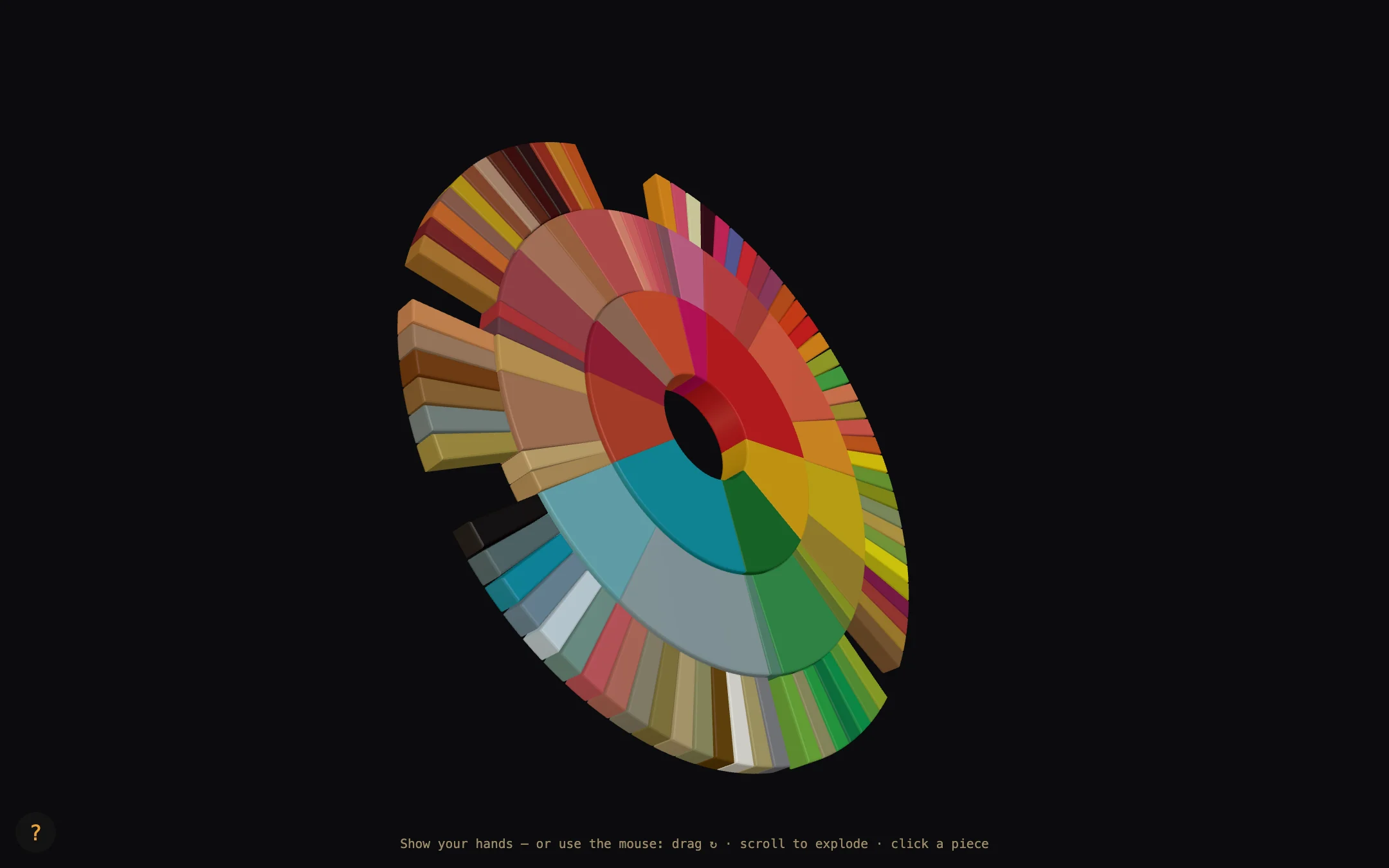
    Dragging rotates and tilts the wheel, so its thickness shows and the pieces read as objects.

  3. Open it up.

    Scrolling spreads the pieces apart. Each small segment gets room, and pointing at one flavour becomes easy.

  4. Every piece on its own.

    Fully open, the three rings separate into single blocks. The structure of the vocabulary is the structure you see.

  5. Name, place, picture.

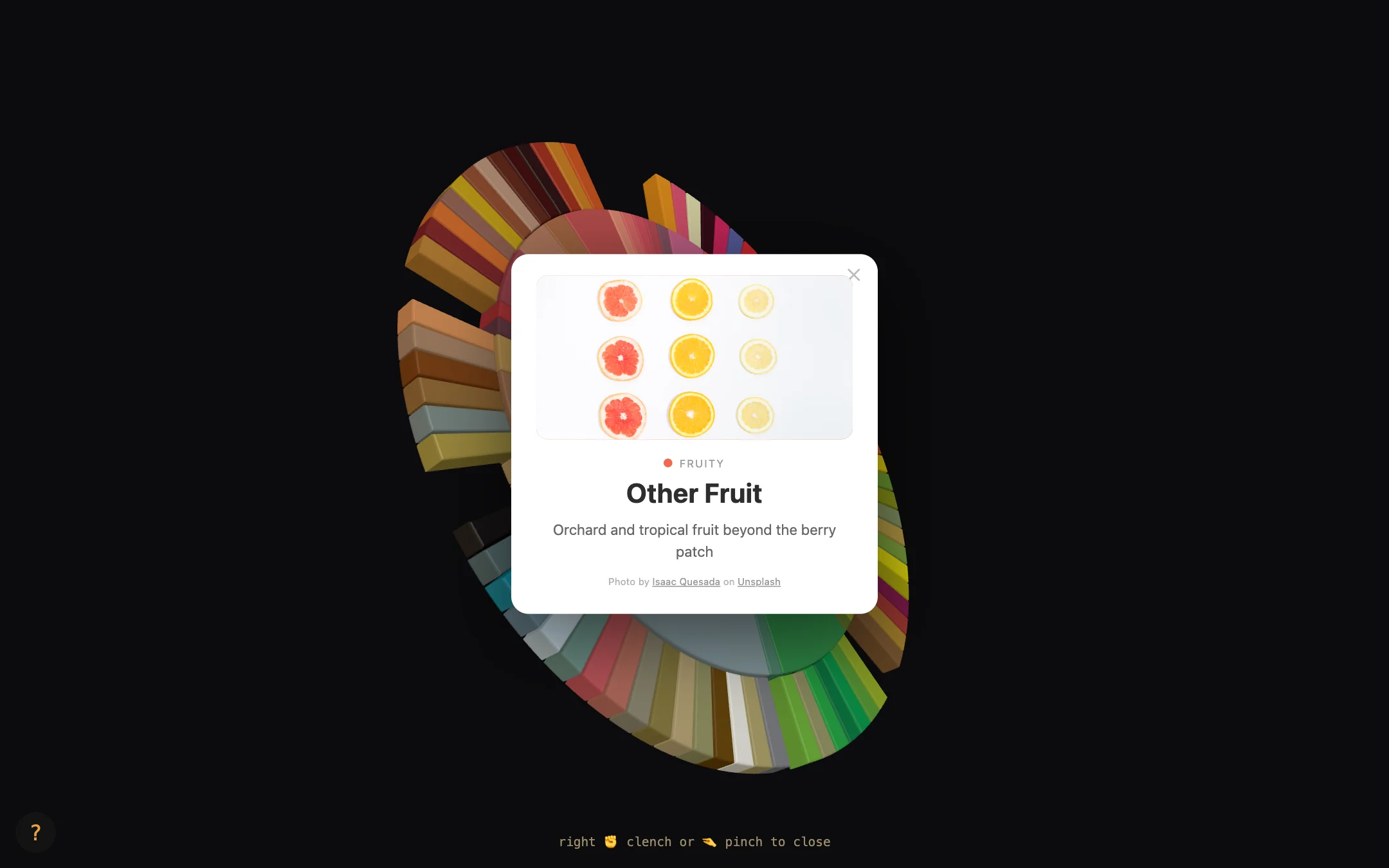
    Selecting a piece opens a card: the flavour, the family it belongs to, a line of description and a photograph.

The flavour wheel seen from the front: three concentric rings of coloured pieces on black

Give the flavour a name, a place and a picture.

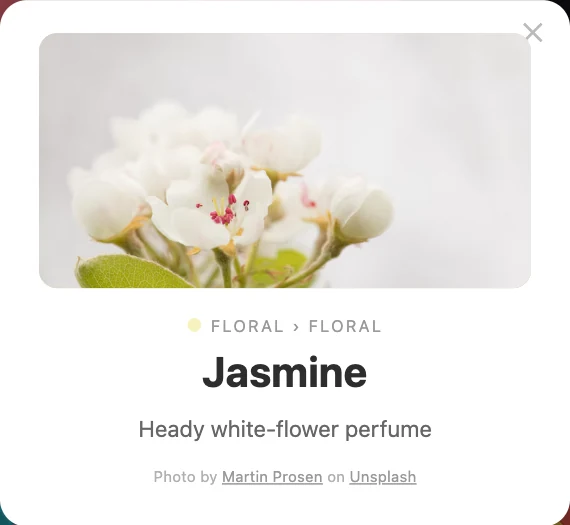
A card ties an abstract word to something familiar. Phenolic is the band-aid note. Jasmine is heady white-flower perfume. The path above the name shows where the flavour sits in the wheel.

Photographs are credited on each card in the interface. Closing a card returns to the same wheel, ready for the next connection.

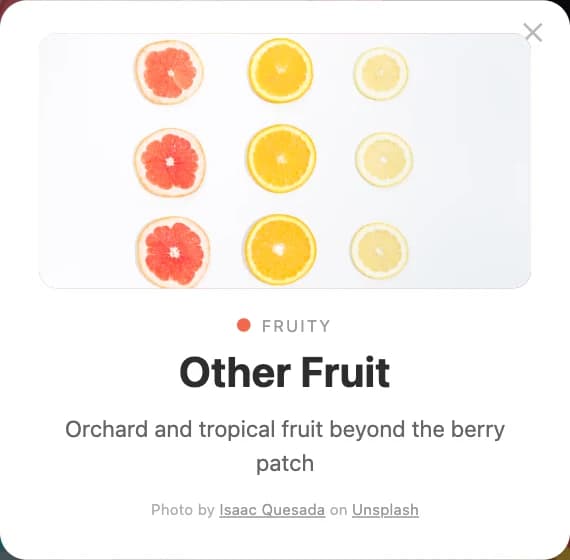
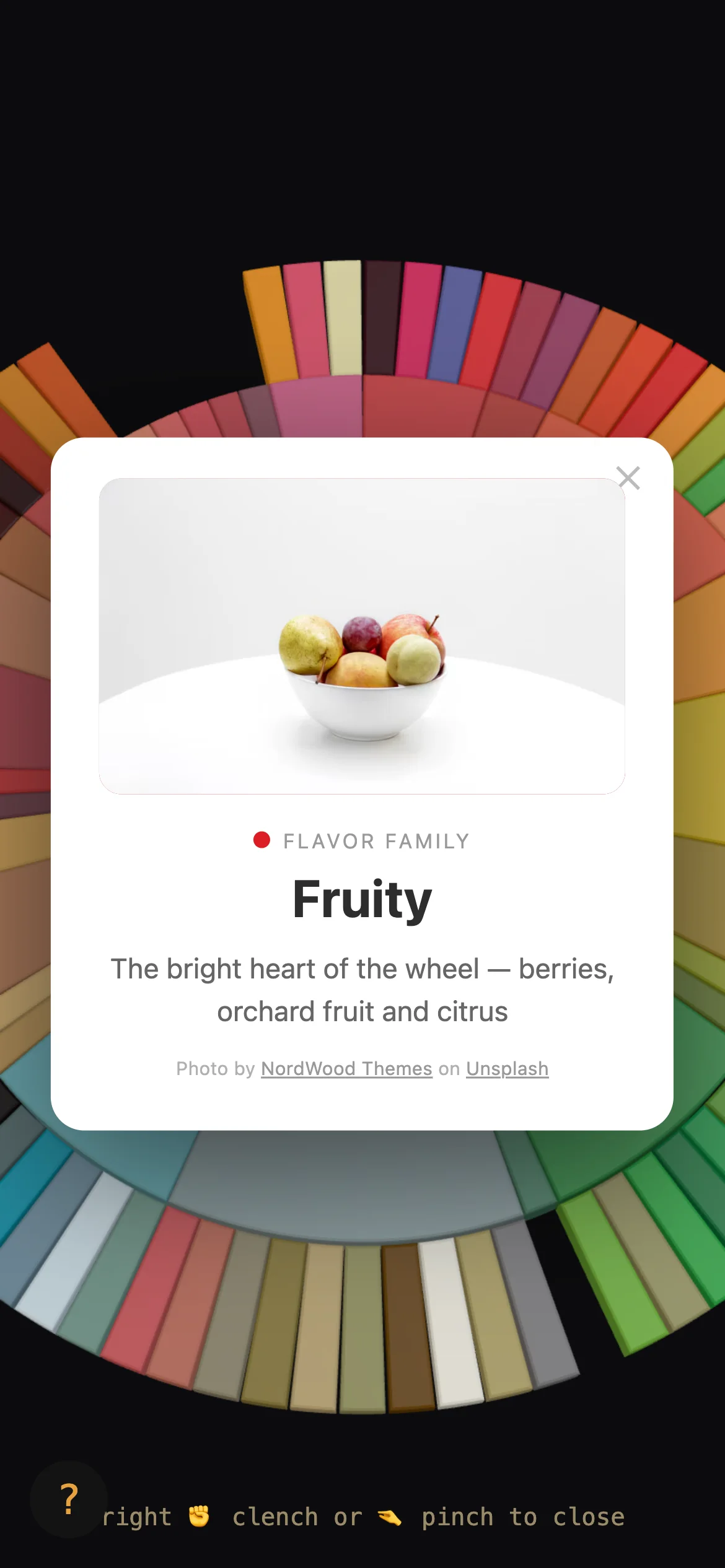
Flavour card: Other Fruit, in the Fruity family. Orchard and tropical fruit beyond the berry patch
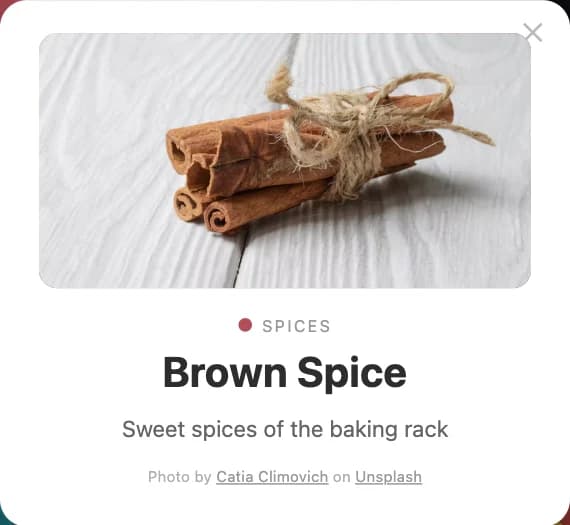
Flavour card: Brown Spice, in the Spices family. Sweet spices of the baking rack
Flavour card: Phenolic, under Other and Papery/Musty. Medicinal smoke, the band-aid note
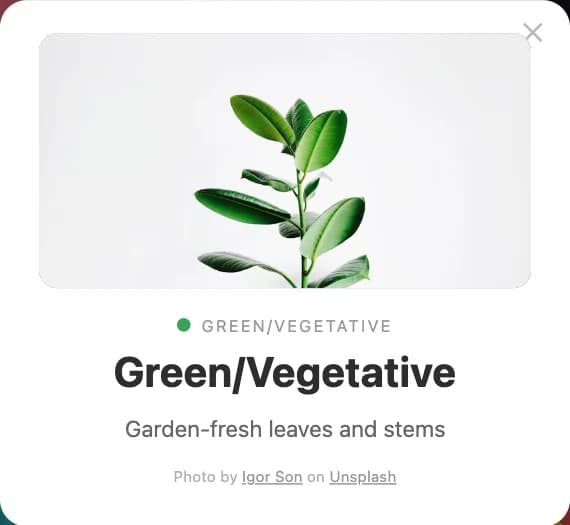
Flavour card: Green/Vegetative. Garden-fresh leaves and stems
Flavour card: Jasmine, in the Floral family. Heady white-flower perfume

The same wheel can also be driven by hand gestures through the camera: a fist grabs it, a pinch selects, two open hands spread it apart.

The same wheel, in the hand.

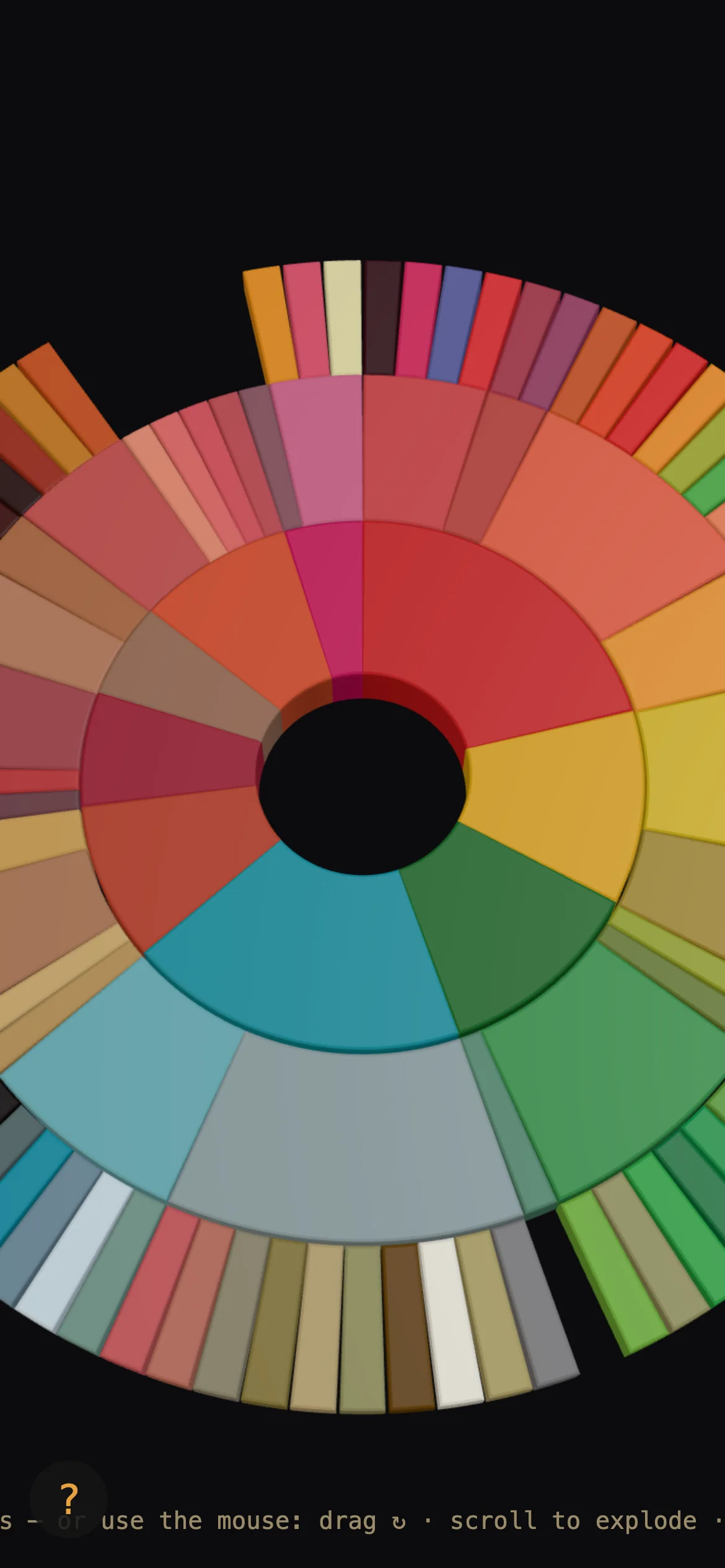
On a phone the wheel fills the width and a tap opens the card. Nothing is hidden behind a menu; the map is the navigation.

Mouse, touch and camera gestures all drive the same three actions: turn, spread, select.

The wheel tilted on a wide screen
On a wide screen, turned by dragging.
The wheel on a phone
The wheel on a phone.
A flavour card open over the wheel on a phone
A card, opened with a tap.

What I take
from it.

The experiment gives a diagram a more physical quality. The relationship between its parts remains visible, while movement offers a reason to pause, explore and compare.

The next design question is how this interaction supports learning over time: helping people remember the vocabulary and connect it to what they taste. This case study describes the prototype’s interaction, without assuming a measured learning outcome.

Nice things I’ve
done recently.

Let’s
have it.

let’s play together