Back to home

Sort These Fish!

A little play, a little knowledge. Discover the catch and the fishing traditions of the Emirates.

Explore the experience
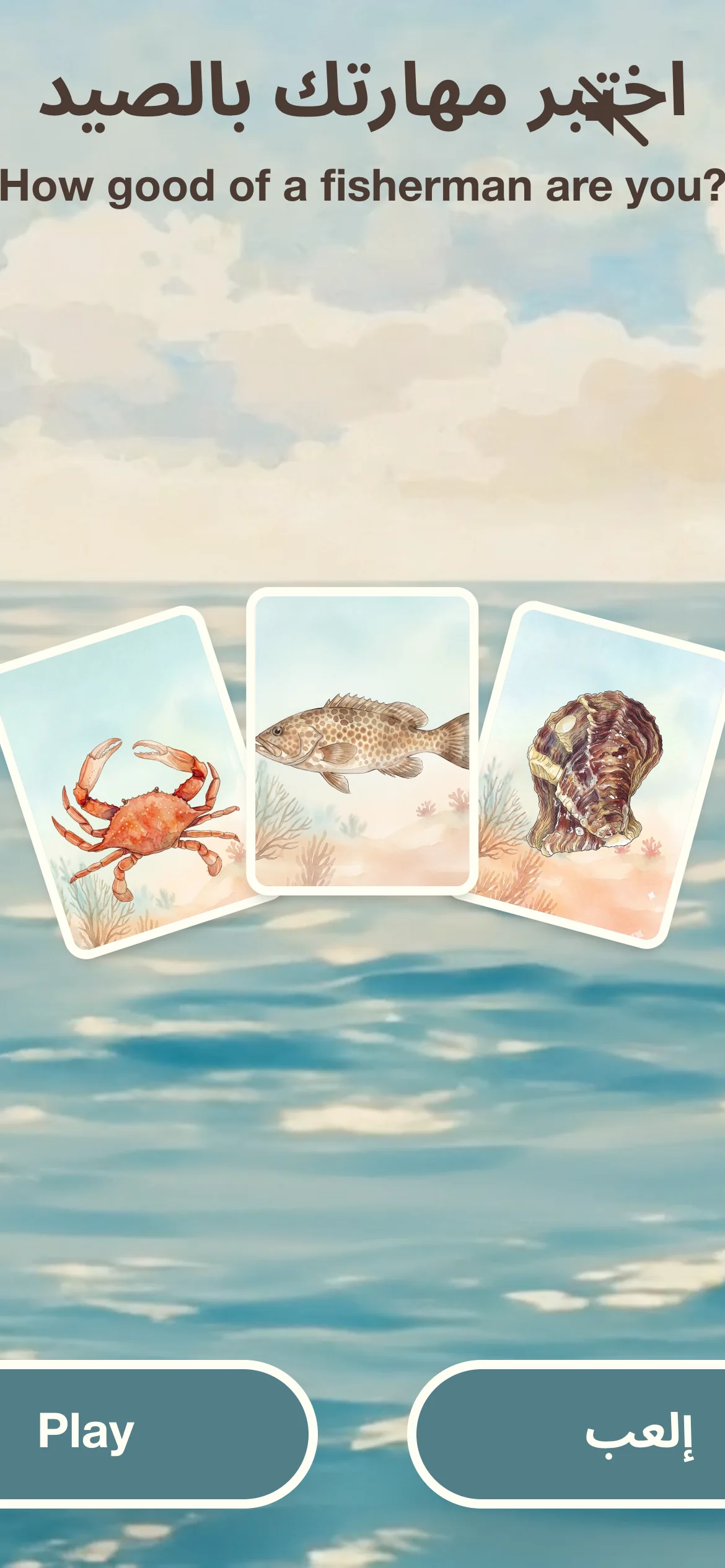
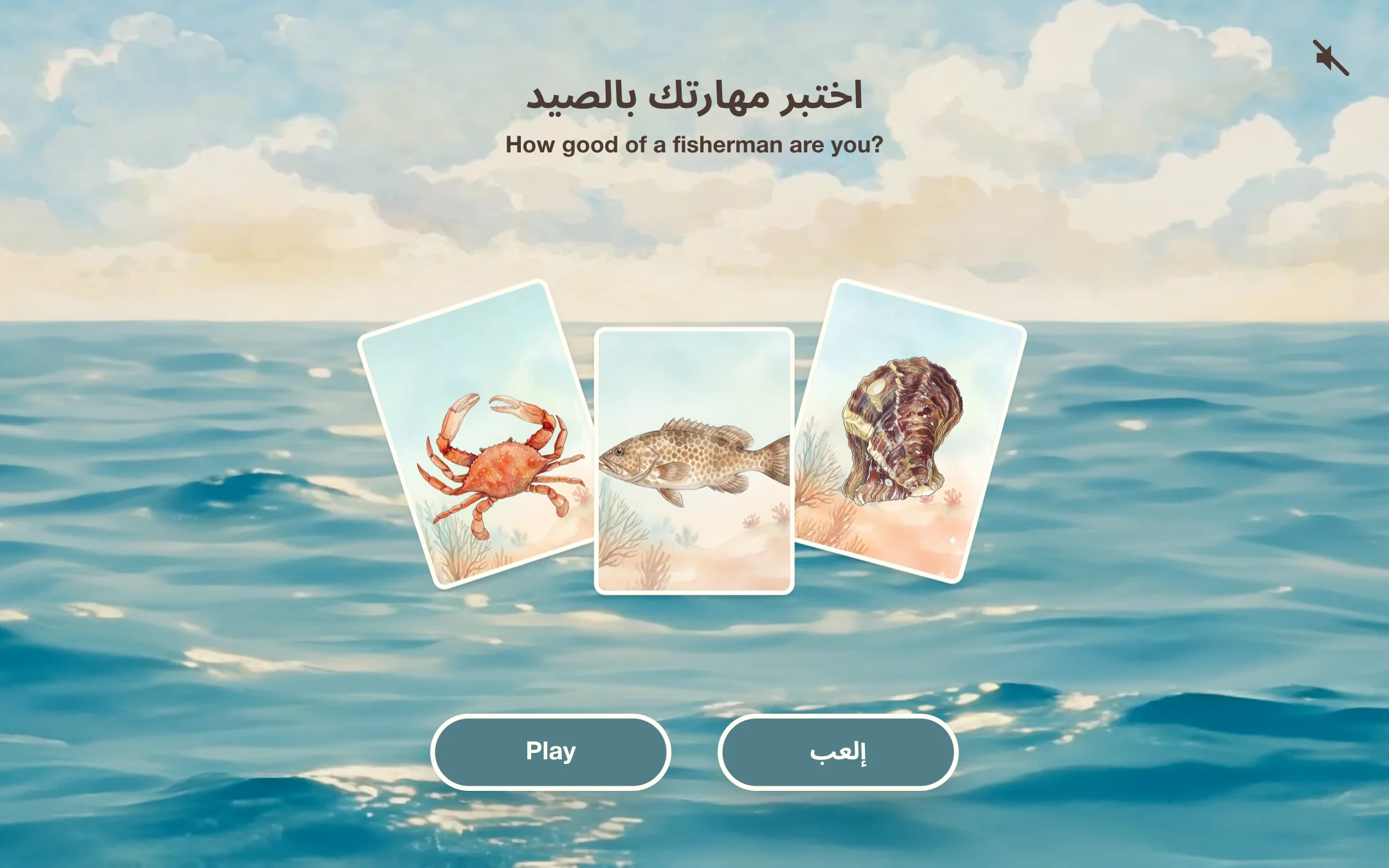
The game’s opening on a phone: How good of a fisherman are you? with crab, hammour and oyster cards and Play buttons in English and Arabic

A little context.

How much can you learn from a catch? This prototype starts with a familiar sorting task and uses it to explore the sea life and fishing traditions of the Emirates.

Illustrated cards introduce each fish. The first round asks which belong to local waters; the second matches the catch to the way it is caught.
Make the first decision easy to understand.

One card, two baskets. The rule is small enough to learn in a single screen, which leaves attention for the fish.

  1. A question to open.

    “How good of a fisherman are you?” Three cards float on the sea, with Play in English and in Arabic.

  2. The rule, shown once.

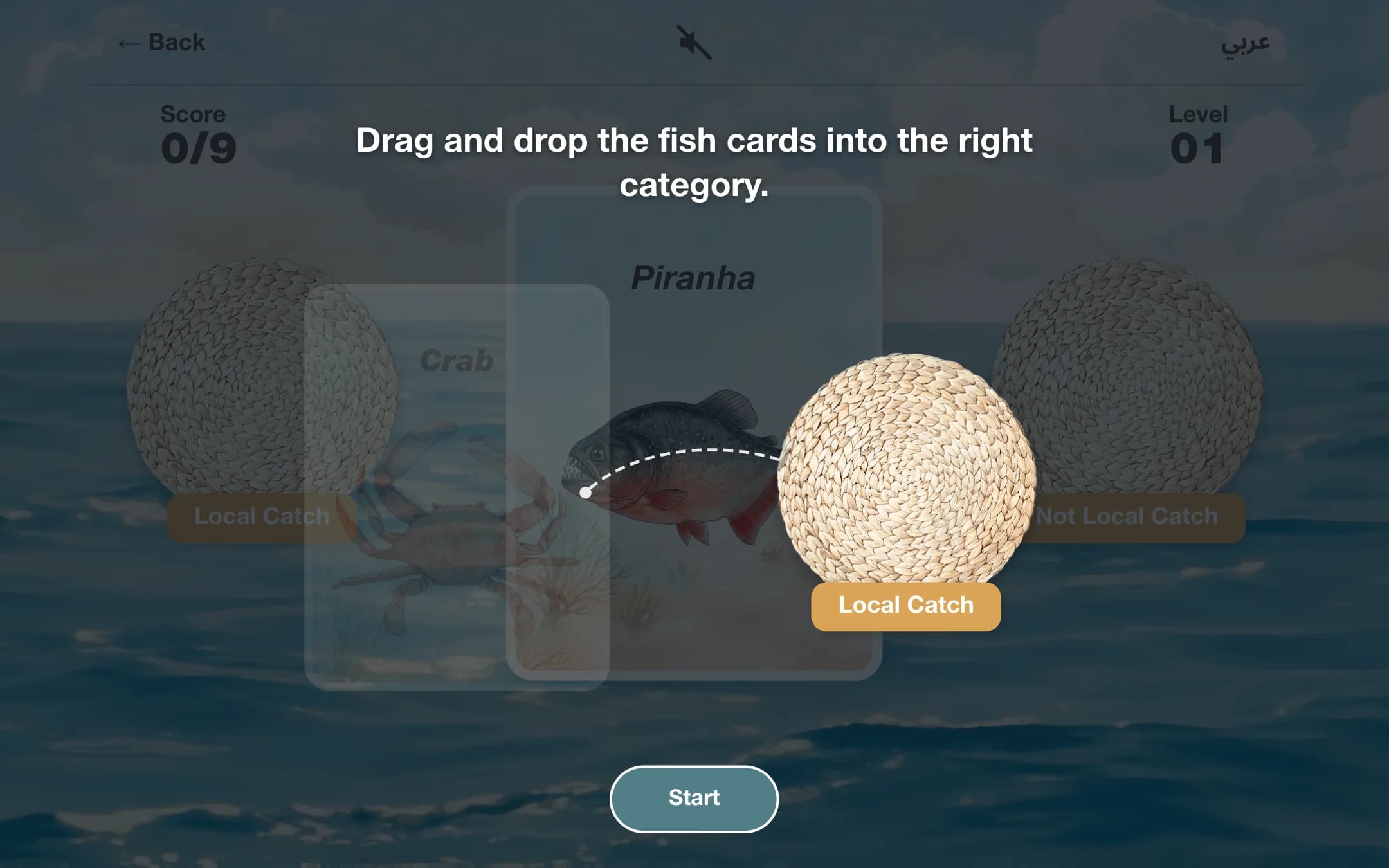
    Before the round, a card arcs into a basket to show the gesture. One line of text says the rest.

  3. One card at a time.

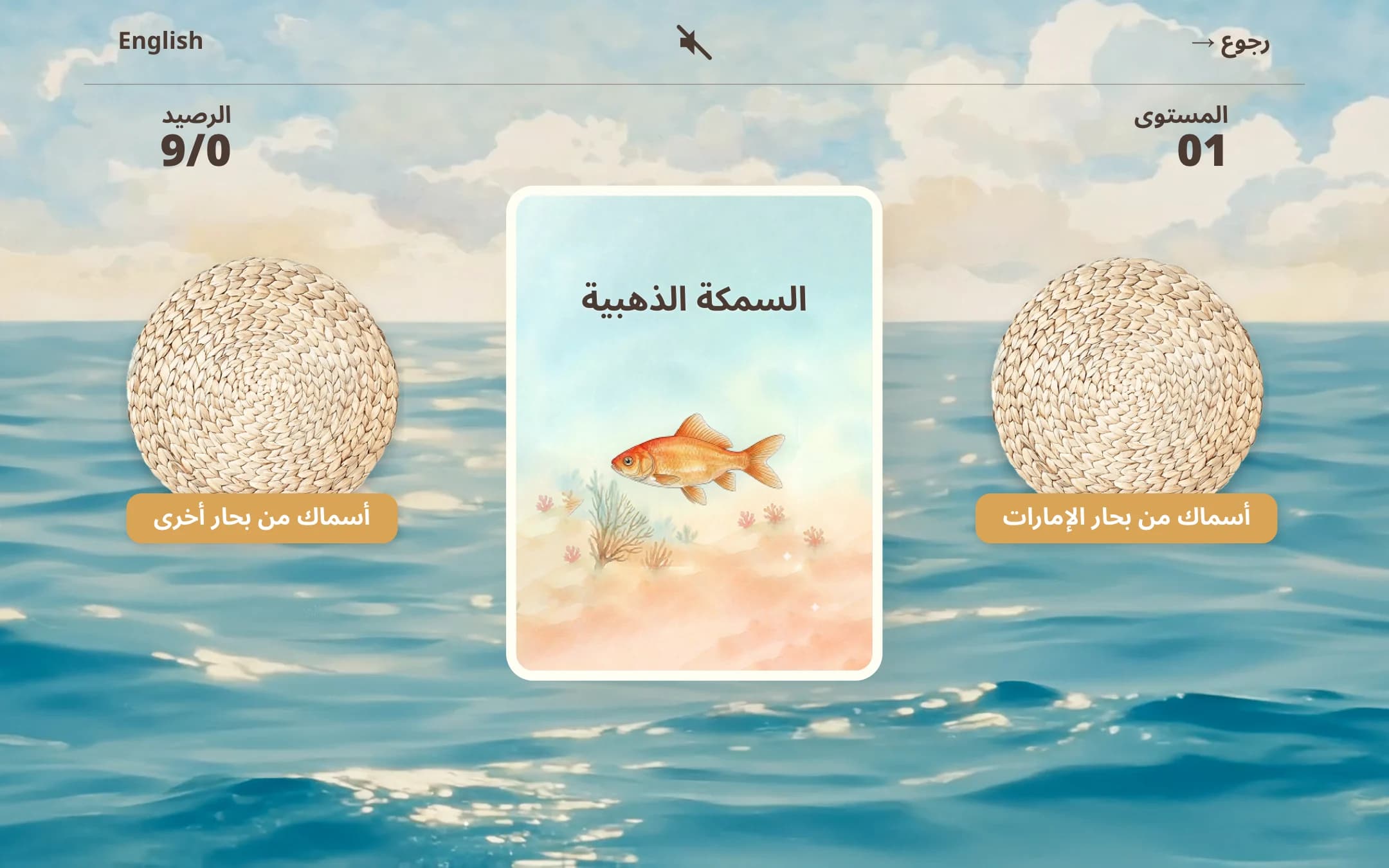
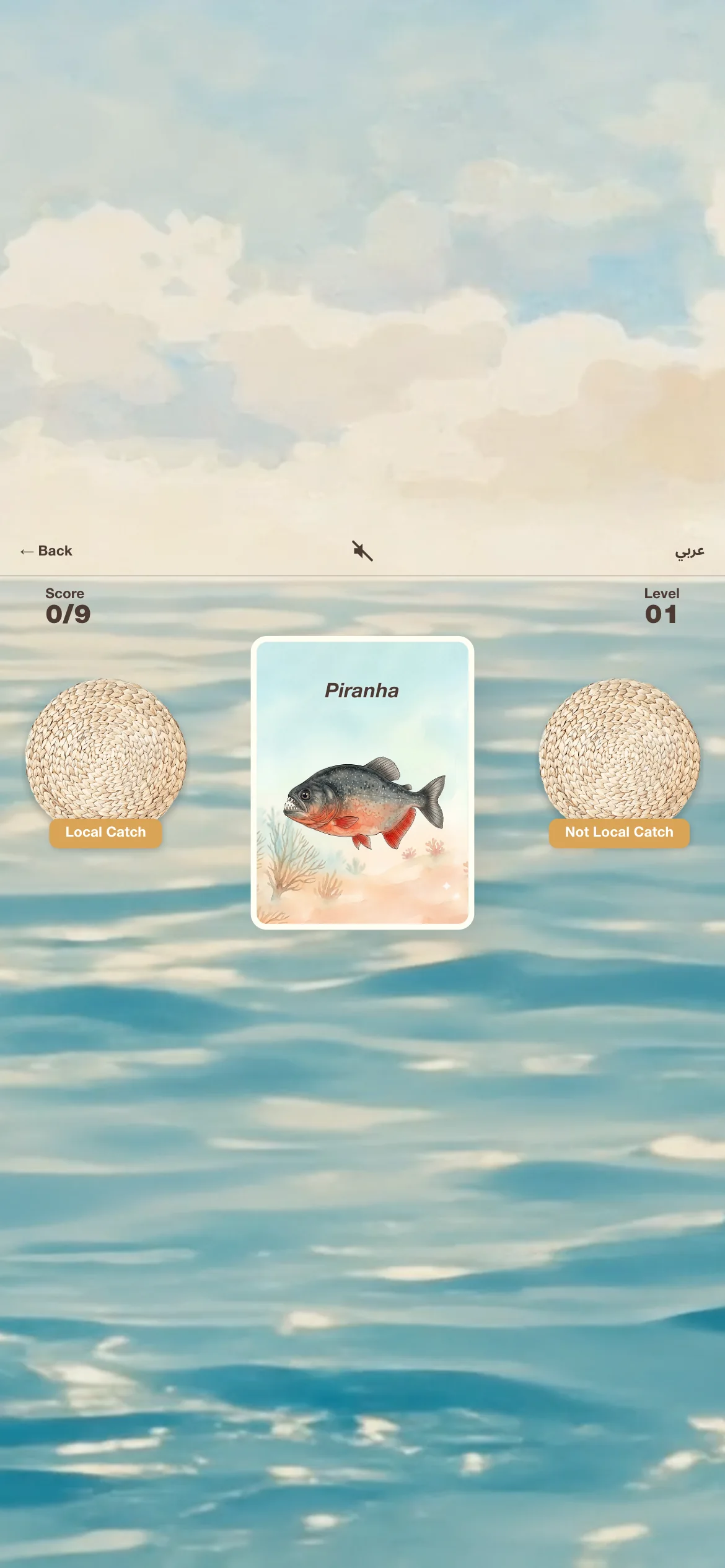
    Drag the fish to Local Catch or Not Local Catch. The score and the level stay in view above the play.

  4. A reason at the end.

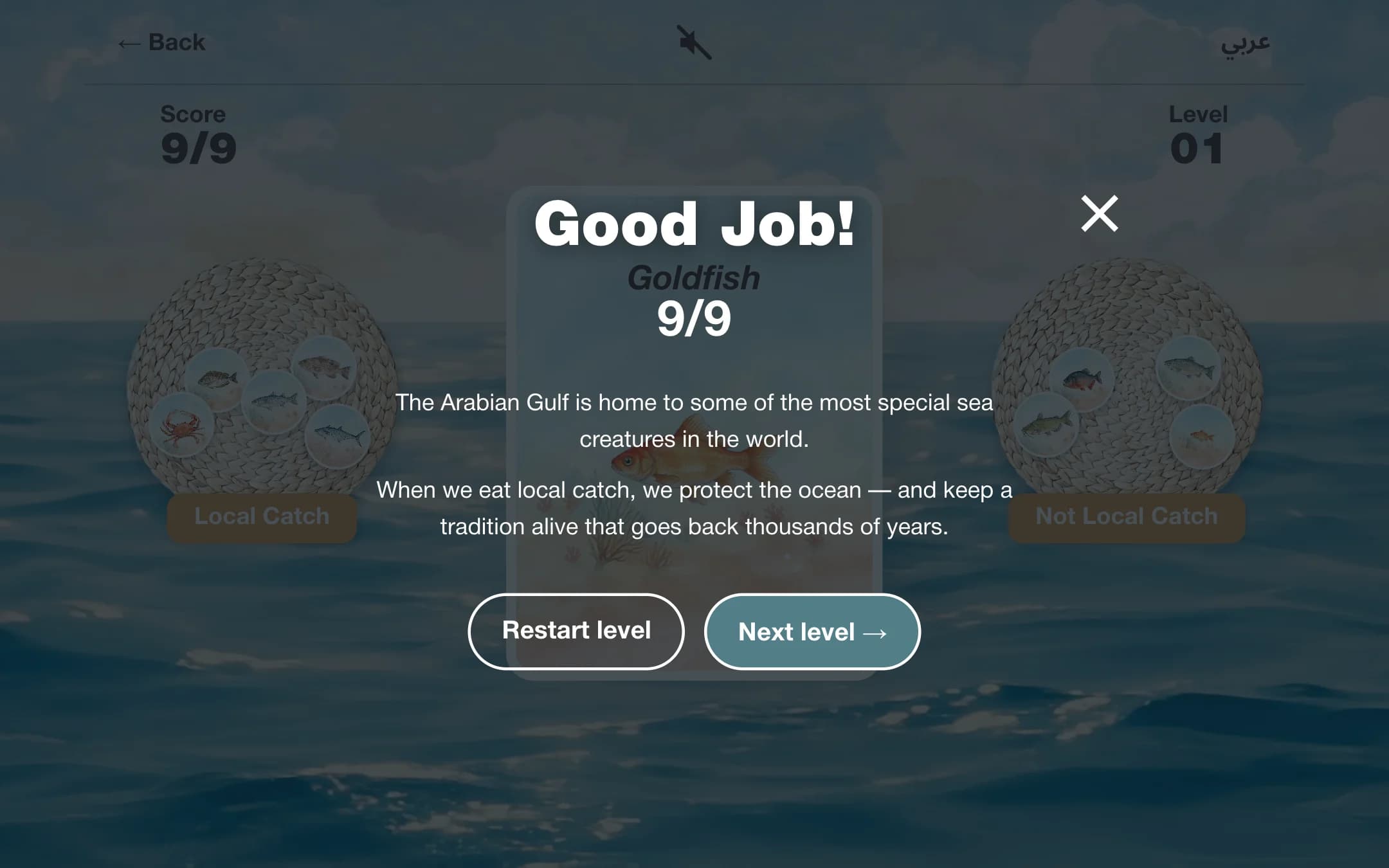
    Nine cards in, the round closes on why it matters: eating local catch protects the sea and keeps a tradition alive.

  5. Then the methods.

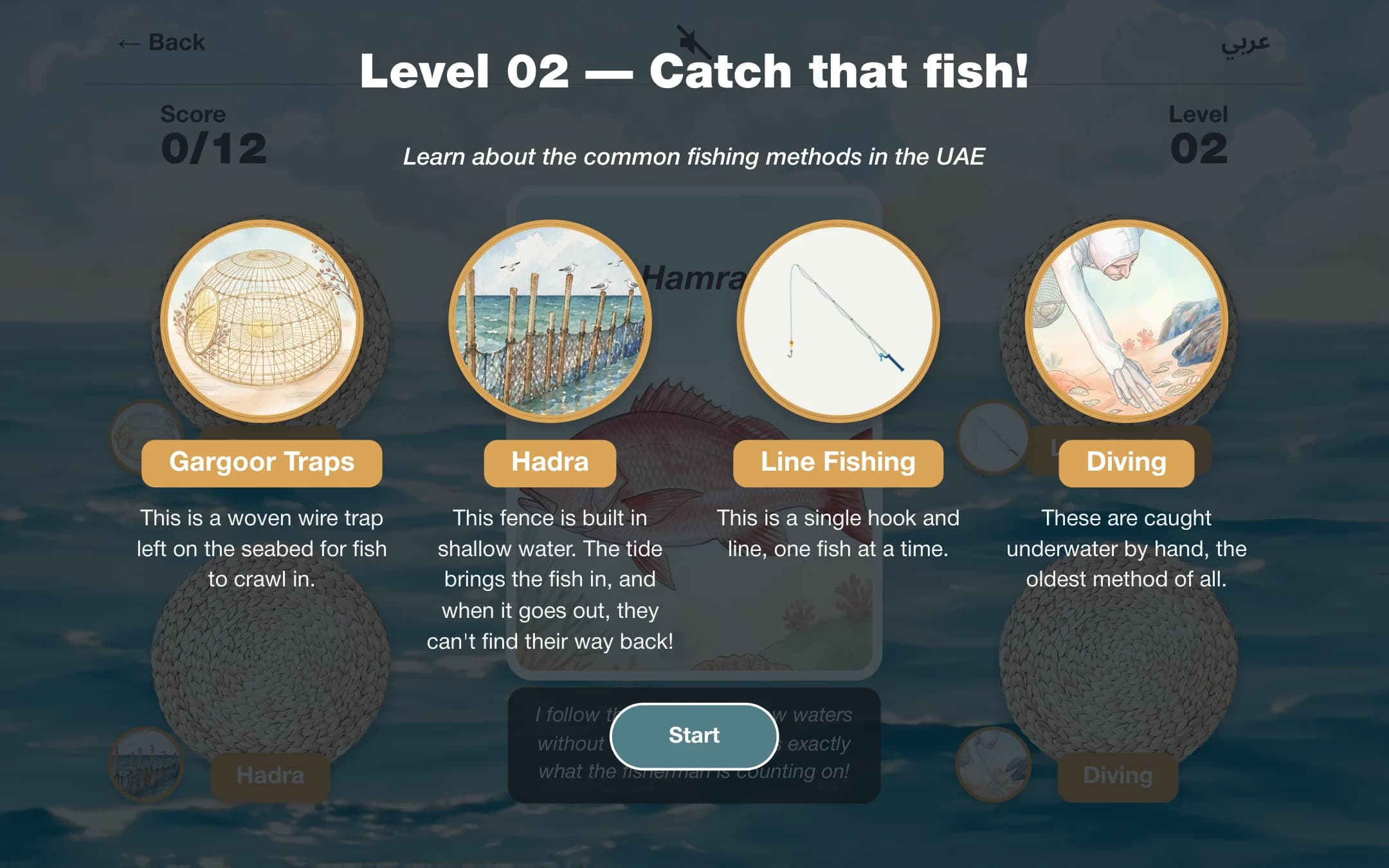
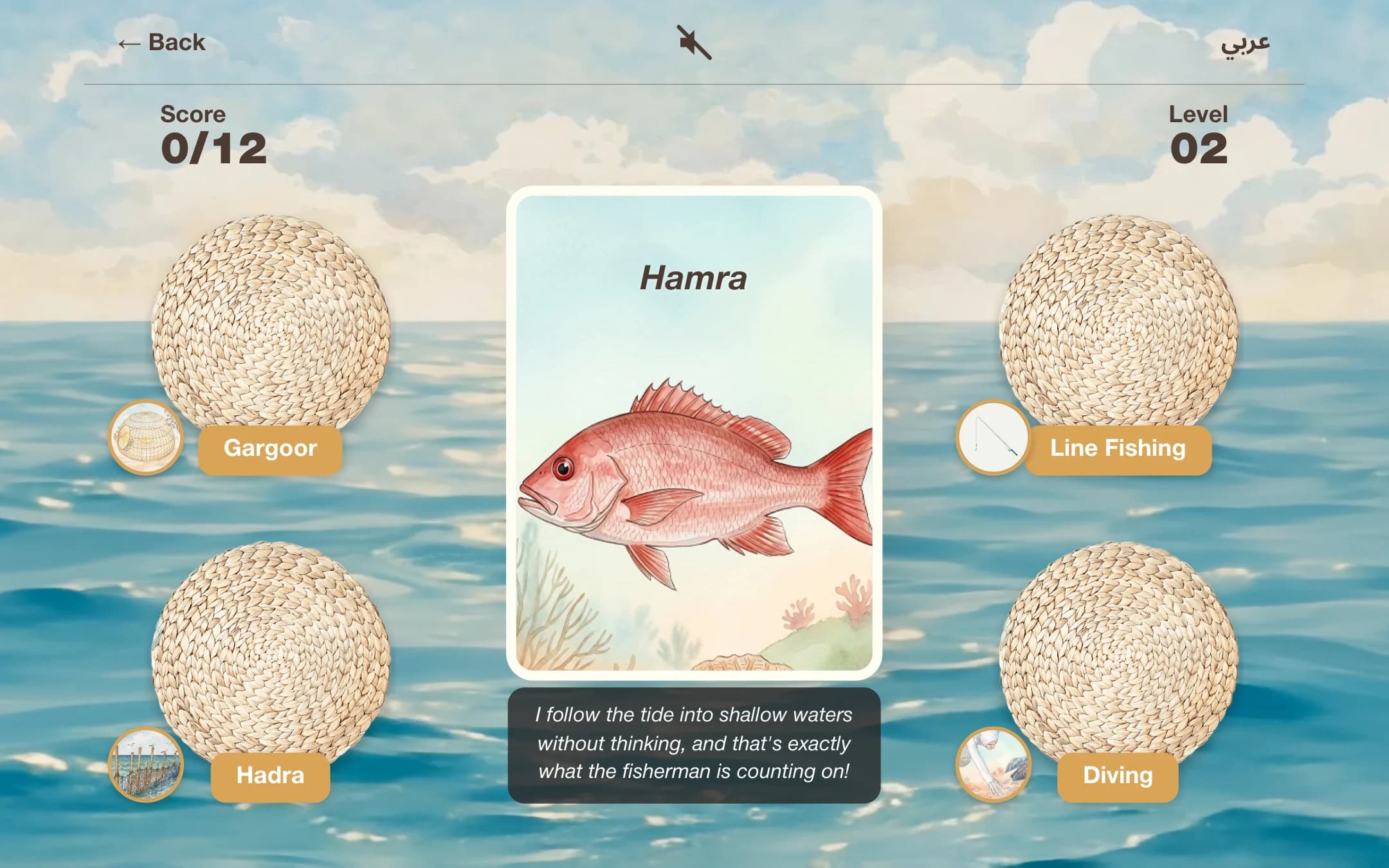
    Level two swaps the baskets for four ways of fishing: gargoor traps, the hadra fence, line fishing and diving. Each catch goes to the method that lands it.

The opening screen: crab, hammour and oyster cards over a painted sea, a question in Arabic and English, and two Play buttons

Let the catch carry the character.

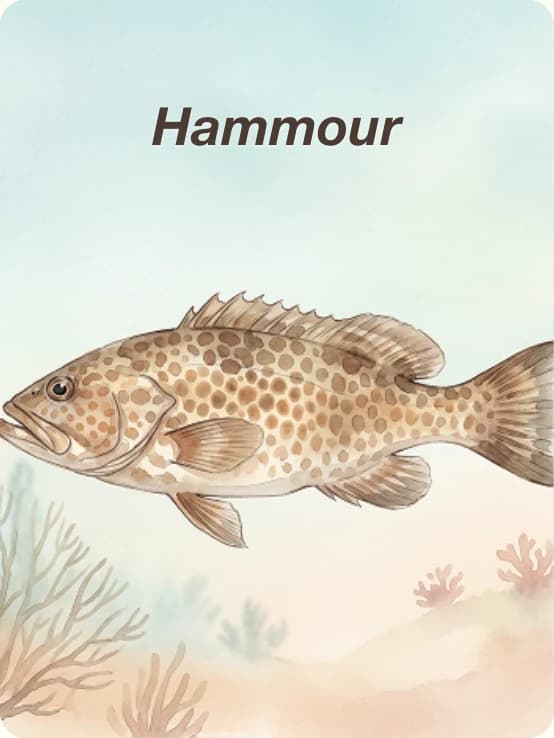
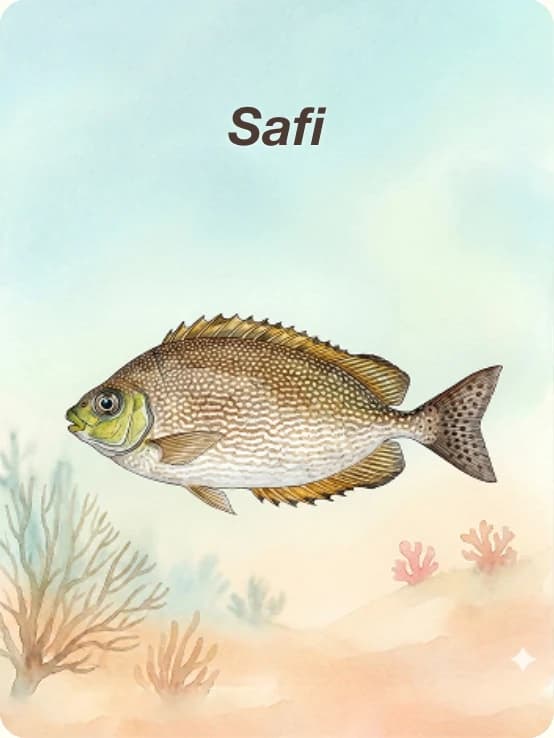
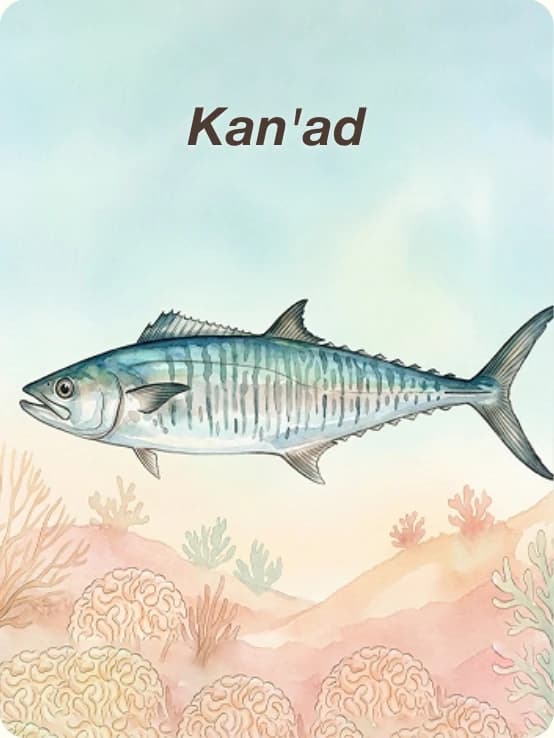
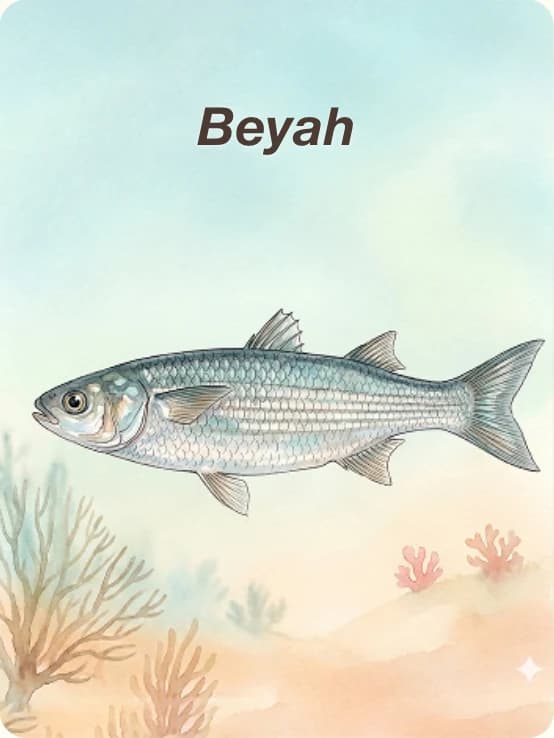
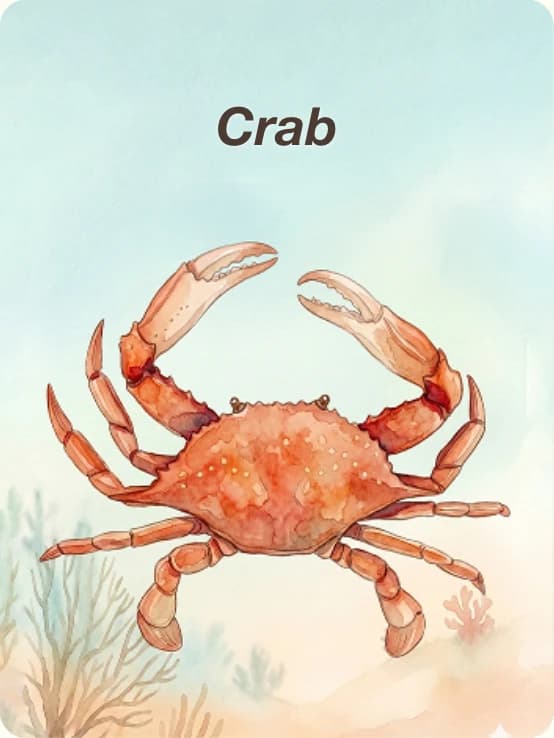
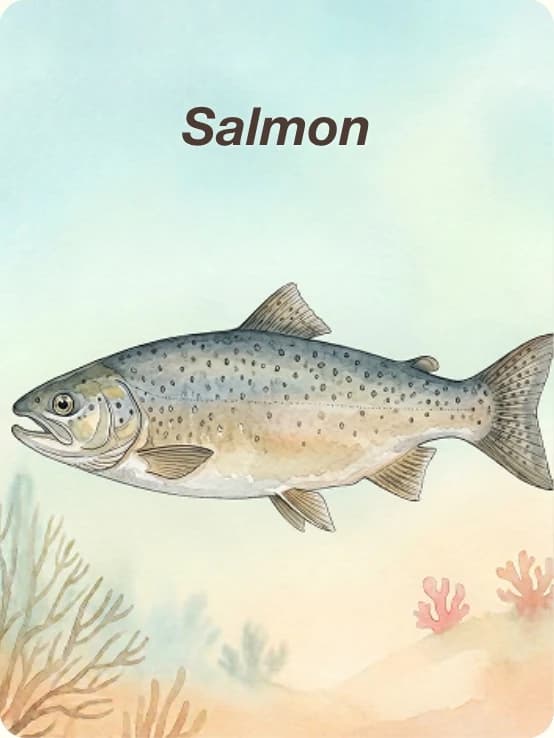
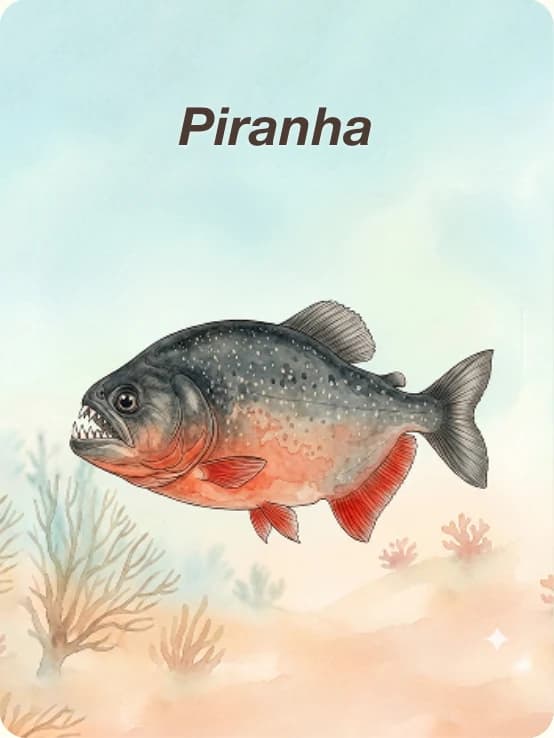
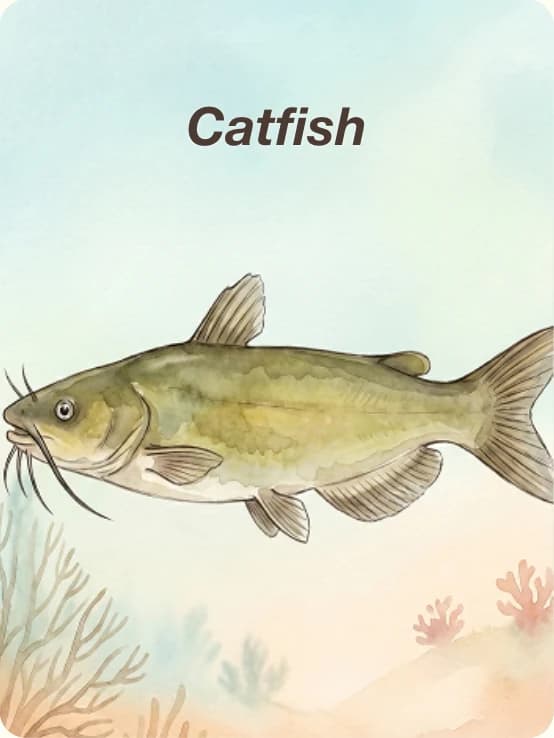
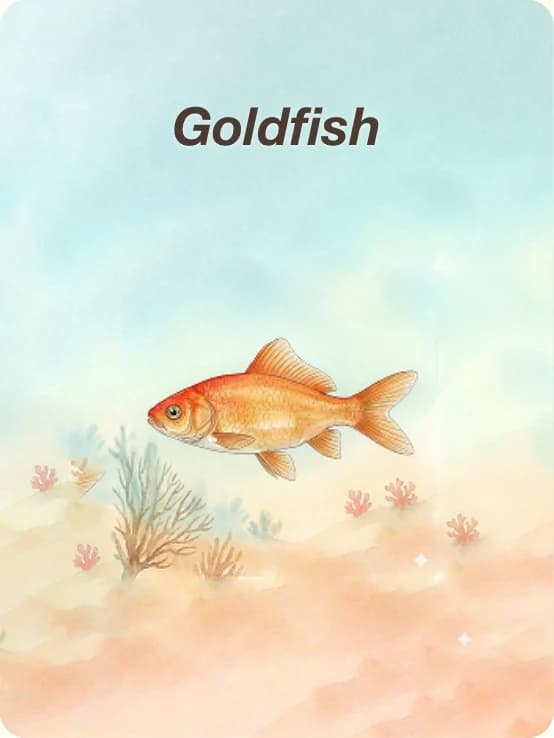
Each card is a small portrait: the fish in watercolour, its name above, sea grass below. The illustration does the teaching before any text does.

Hammour, safi, kan’ad and beyah belong to the Gulf. Salmon, piranha, catfish and goldfish do not, and telling them apart is the game.

Fish card: Hammour
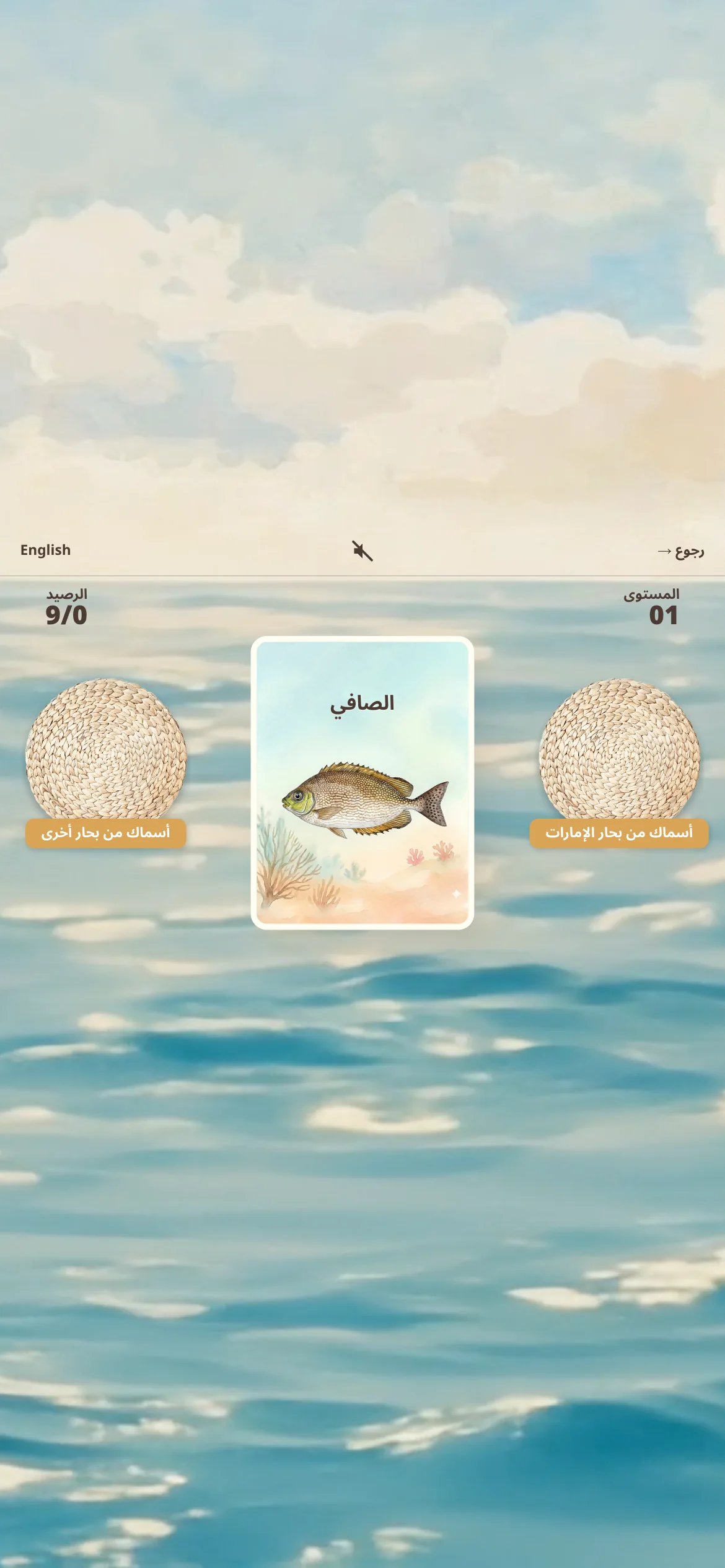
Fish card: Safi
Fish card: Kan’ad
Fish card: Beyah
Fish card: Crab
Fish card: Salmon
Fish card: Piranha
Fish card: Catfish
Fish card: Goldfish

Nine cards in the first round. The same hand draws the baskets, the sea and the methods.

Play in the language that feels at home.

English and Arabic are offered from the first screen. In Arabic the fish names, the baskets and the progress all change together, and the layout mirrors.

The illustration and the gesture stay the same. The words change; the fish and the task remain familiar.

A sorting round in Arabic: a fish card between two baskets with Arabic labels, score and level mirrored
A round in Arabic.
A sorting round on a phone in English
The round on a phone.
The same round on a phone in Arabic
The same round in Arabic.
A level-two round: a Hamra card in the middle, baskets for Gargoor, Line fishing, Hadra and Diving at the corners, and a riddle about the tide below
Level two: a riddle for each catch, and four ways to land it.

What I take
from it.

A small interaction can carry useful subject matter when the rule is clear and the content has character. Here, sorting provides a simple reason to look closely at each species and the world it belongs to.

The case study documents a working prototype direction. Accuracy of the learning content and the experience of different age groups remain areas to evaluate before presenting it as a finished learning product.

Nice things I’ve
done recently.

Let’s
have it.

let’s play together